
Table of Contents
- Vinyl Fencing Worth It: The McAllen Climate Reality
- Wood vs Vinyl Fence Comparison for Local Conditions
- Durability of Vinyl Fencing in High Heat and Weather Events
- Vinyl Fence Cost Per Foot and Long-Term Investment
- Maintenance Requirements and Upkeep Expectations
- Pros and Cons of Vinyl Fencing for Your Property
- Installation Considerations and Structural Integrity
- Conclusion: Making Your Vinyl Fencing Decision
- Frequently Asked Questions
Last Updated: September 3, 2026
Vinyl Fencing Worth It: The McAllen Climate Reality
When homeowners in the Rio Grande Valley consider fencing upgrades, the central question isn’t whether vinyl exists, it’s whether vinyl fencing worth it makes financial and practical sense for properties here. The answer depends on what you’re weighing: upfront cost against long-term durability, maintenance burden against aesthetic consistency, and property value gains against your specific climate exposure.
At Alpha Guard, we’ve installed many vinyl fences across McAllen and analyzed the real trade-offs that matter. Vinyl performs differently here than it does in cooler climates. The intense Texas heat, occasional severe weather events, and UV exposure create specific conditions that either validate or undermine the vinyl investment depending on your priorities and property layout (peer-reviewed research).
This guide cuts through the marketing and walks through the actual durability metrics, cost comparisons, maintenance realities, and installation considerations that determine whether vinyl fencing worth it for your situation.
Vinyl fencing is worth it in McAllen if you prioritize low maintenance and consistent appearance over the lowest upfront cost. It delivers 20-30 years of service in this climate with minimal upkeep, but only if you choose commercial-grade material and [professional installation](/fence-installation-mcallen-professional-fence-installation-services-mcallen/).
Wood vs Vinyl Fence Comparison for Local Conditions
The choice between wood and vinyl comes down to three variables: climate resilience, maintenance commitment, and total cost of ownership over time.
Wood fencing offers lower initial cost and traditional curb appeal. Cedar and treated lumber are common in the region, and local contractors are familiar with installation. The catch: wood requires regular maintenance that intensifies under McAllen’s conditions. The combination of intense sun, occasional high-wind weather events, and moisture creates an environment where wood deteriorates faster than in temperate climates. Rot, warping, and splintering become problems within 5-8 years without consistent treatment.
Vinyl eliminates the maintenance cycle entirely. It doesn’t rot, splinter, or require staining. The structural integrity remains stable through thermal expansion cycles that occur daily in high-heat environments. Where vinyl falters is upfront cost, typically 30-40% more per linear foot than pressure-treated wood, and the fact that color fading can occur after 10-15 years of direct UV exposure, depending on material thickness and pigment quality.
| Material | Initial Cost | Maintenance | Lifespan | Best For |
|---|---|---|---|---|
| Pressure-Treated Wood | Lower | High (annual staining/sealing) | 5-8 years | Budget-conscious, short-term projects |
| Cedar Wood | Moderate | High (regular treatment) | 8-12 years | Traditional aesthetics, lower budget |
| Vinyl (Standard Grade) | Higher | Minimal (occasional cleaning) | 15-20 years | Low-maintenance preference, moderate budget |
| Vinyl (Commercial Grade) | Highest | Minimal (occasional cleaning) | 20-30 years | Long-term investment, durability priority |
The real difference emerges over 15-20 years. A wood fence installed today will require replacement or major repair within that window. A commercial-grade vinyl fence installed today will still be standing with minimal degradation.
If you’re comparing quotes, ask contractors whether they’re offering standard-grade or commercial-grade vinyl. The difference in material thickness and UV-resistant pigments directly affects lifespan and color retention.
Durability of Vinyl Fencing in High Heat and Weather Events
Vinyl’s performance in McAllen’s climate hinges on understanding how heat and occasional severe weather affect the material. PVC fencing expands and contracts with temperature swings. In a region where daily highs exceed 95°F for months and drop 30+ degrees at night, thermal expansion cycles are constant. Quality vinyl is engineered to handle this, but inferior products aren’t.
Commercial-grade vinyl contains thicker walls (typically 0.090 inches or more) and UV-resistant pigments that resist fading (astm.org). Standard-grade vinyl (0.060-0.080 inches) becomes brittle faster and shows color fading more visibly within 8-10 years. The structural integrity of thicker material means posts and panels resist impact damage from wind-blown debris better during weather events.
Moisture resistance is another factor. While vinyl doesn’t absorb water like wood, it can allow water to pool at the base if drainage isn’t properly installed. In McAllen’s occasional heavy rain, poor installation leads to standing water and algae growth, which doesn’t damage the vinyl but affects appearance.
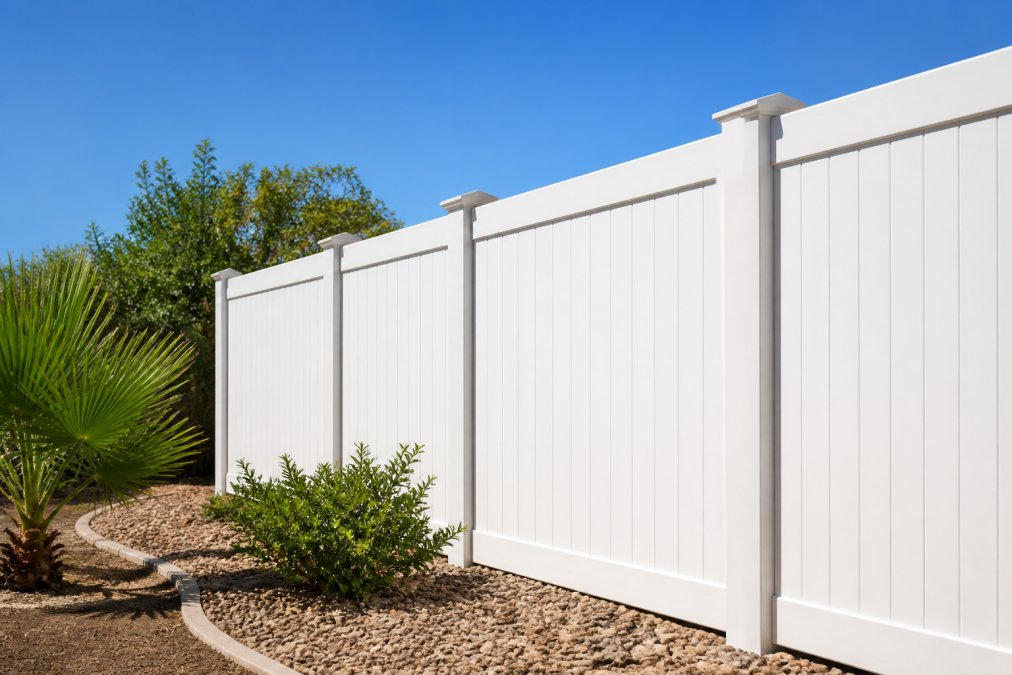
Wind load resistance matters for McAllen properties. A properly installed vinyl fence with concrete footings and appropriate post spacing (typically 6 feet) handles sustained winds up to 90 mph. What fails during severe weather isn’t usually the vinyl itself, it’s poor installation, undersized posts, or inadequate concrete depth. This is where professional installation becomes non-negotiable.
The long-term investment case for vinyl durability is strong: 20-30 years of service with minimal degradation if you choose commercial-grade material and ensure proper installation. Wood requires replacement or major restoration within that same window.
Vinyl Fence Cost Per Foot and Long-Term Investment
Vinyl fencing cost per foot in McAllen typically ranges based on material grade and installation complexity. Standard-grade vinyl runs lower per linear foot; commercial-grade runs higher. Your actual project cost depends on linear footage, gate installations, post spacing adjustments for uneven terrain, and site access.
Rather than stating specific pricing, which varies by contractor, material sourcing, and project scope, the real analysis is comparing total cost of ownership over 20 years.
Wood fence: lower initial investment, but factor in restaining or sealing every 2-3 years, potential board replacement by year 8-10, and full fence replacement by year 15-20. The cumulative cost often exceeds vinyl by year 12-15.
Vinyl fence: higher upfront cost, but zero maintenance expenses over 20 years. No staining, sealing, or repairs. The cost-benefit analysis shifts in vinyl’s favor around year 10-12, depending on how aggressively you maintain wood.
For homeowners planning to stay in the property long-term (10+ years), vinyl becomes the better financial choice. For those considering a near-term sale, the upfront cost difference may not be recovered in resale value.
Avoid the temptation to choose the cheapest vinyl option based solely on per-foot pricing. Standard-grade vinyl that fades visibly after 10 years looks worse than wood that’s simply aging. Commercial-grade vinyl maintains curb appeal for the full lifespan, and that matters for property value.
Maintenance Requirements and Upkeep Expectations
This is where vinyl’s value proposition becomes most tangible. Vinyl fencing requires virtually no structural maintenance. No staining, sealing, or treatment needed. No wood rot inspections. No splintering repairs.
Routine upkeep is minimal: occasional cleaning with a garden hose and mild soap removes dust, pollen, and algae buildup. In McAllen’s dusty climate, you might clean fence panels 1-2 times per year to maintain appearance. That’s it.
Compare this to wood, which requires:
- Annual or bi-annual staining or sealing to prevent rot
- Regular inspection for soft spots, splintering, or warping
- Board replacement as wood deteriorates
- Post rot prevention and repair
- Paint or stain touch-ups after weather events
Over 20 years, the maintenance burden on wood is substantial, both in time and cost. Vinyl eliminates that entirely.
One caveat: vinyl’s appearance depends on color consistency. If you choose standard-grade vinyl, expect noticeable fading after 10-15 years, particularly on south-facing panels exposed to intense UV. This isn’t a structural failure, the fence still functions, but it affects curb appeal. Commercial-grade vinyl resists fading much more effectively, maintaining color for the full 20-30 year lifespan.
Pros and Cons of Vinyl Fencing for Your Property
What Works:
Vinyl delivers genuine low-maintenance performance. If you’re tired of maintaining wood or prefer not to manage seasonal upkeep, vinyl eliminates that burden entirely. The structural integrity holds through McAllen’s heat cycles and occasional severe weather. Aesthetic versatility is real, vinyl comes in multiple colors and styles that complement various home designs. Rot resistance is absolute: vinyl won’t decay, harbor termites, or develop the structural weakness that wood eventually does.
Property value gains are modest but real. Vinyl fencing adds curb appeal and signals property maintenance to potential buyers. It’s not a major value driver like a kitchen renovation, but it removes a liability (a deteriorating fence) and adds a durable asset.
What Doesn’t:
Vinyl’s upfront cost is higher than wood, sometimes significantly. For budget-constrained projects, the per-foot pricing creates sticker shock. Installation mistakes are harder to fix than with wood. A poorly installed vinyl fence (inadequate concrete depth, wrong post spacing, improper thermal expansion allowance) creates problems that are expensive to correct. Vinyl isn’t repairable in the way wood is, you can’t patch a section; you typically replace the panel.
Color fading on standard-grade vinyl happens. It’s not structural failure, but it affects appearance. If you choose budget vinyl and expect it to look new after 15 years, you’ll be disappointed. Commercial-grade vinyl resists fading better but costs more upfront.
Thermal expansion requires proper installation. Vinyl expands and contracts with temperature changes. If panels are installed too tightly or posts aren’t set correctly, buckling can occur. This is a contractor problem, not a material problem, but it highlights why professional installation matters.
Homeowners who plan to stay in their property 10+ years, prefer minimal maintenance, and prioritize durability over lowest upfront cost.
Installation Considerations and Structural Integrity
Installation quality determines whether vinyl fencing delivers its promised durability or becomes a costly mistake. This is where the difference between a general contractor and a fence specialist becomes critical.
Proper vinyl fence installation requires:
- Post footings: Concrete depth of 24-30 inches minimum, deeper in areas with poor soil stability. McAllen’s sandy soil sometimes requires deeper footings for structural integrity.
- Thermal expansion allowance: Vinyl panels need small gaps (typically 1/8 inch) to expand and contract with temperature. Tight installation leads to buckling.
- Post spacing: Standard spacing is 6 feet, but uneven terrain may require adjustments. Improper spacing compromises wind load resistance.
- Material thickness: Commercial-grade vinyl (0.090+ inches) provides better structural integrity than standard-grade (0.060-0.080 inches).
- Gate installation: Gates require reinforced posts and proper hinge placement to prevent sagging over time.
Alpha Guard’s installation approach emphasizes commercial-grade materials and proper post depth for McAllen’s soil conditions. Our certified and insured installers ensure thermal expansion allowances and structural integrity throughout the project, not just initial installation, but long-term performance under local climate conditions.
Common installation mistakes that compromise durability:
- Insufficient concrete depth (leads to post movement and panel stress)
- Tight panel installation (causes buckling during thermal expansion)
- Undersized posts or improper spacing (reduces wind load capacity)
- Inadequate drainage at fence base (creates algae and moisture issues)
When evaluating contractor quotes, ask about post depth, material grade, and their process for thermal expansion allowance. These details directly affect whether your vinyl fence delivers 20 years of service or becomes a problem within 5-10 years.
Conclusion: Making Your Vinyl Fencing Decision
Is vinyl fencing worth it in McAllen? The answer is yes, if you’re installing commercial-grade material, using a qualified contractor, and planning to keep the property long enough to recoup the upfront cost through avoided maintenance and replacement cycles.
The real value isn’t in the fence itself. It’s in the freedom from maintenance burden and the confidence that your property boundary will remain structurally sound through 20-30 years of Texas heat, wind, and weather cycles. Wood fencing requires constant attention in this climate. Vinyl doesn’t.
If you’re ready to explore vinyl fencing for your property, Alpha Guard can help. Our certified and insured professionals specialize in installations engineered specifically for McAllen’s climate conditions, using commercial-grade materials and guaranteed structural workmanship. We provide free estimates and flexible financing options to make the investment accessible.
Get a Free Estimate from Alpha Guard and see how vinyl fencing can enhance your property’s durability, value, and curb appeal.
Making the decision? Consider these factors:
Your timeline matters. If you’re staying 10+ years, vinyl’s cost-benefit analysis favors the investment. If you’re planning to sell within 5 years, the upfront cost may not be recovered.
Material grade is critical. Commercial-grade vinyl costs more but delivers 20-30 years of service and color retention. Standard-grade saves money upfront but fades visibly and may need replacement by year 15-20.
Professional installation is non-negotiable. A poorly installed vinyl fence, regardless of material quality, becomes a liability. Choose a contractor with local experience and verifiable certifications.
Maintenance preference is real. If you prefer zero fence upkeep, vinyl eliminates the burden entirely. If you enjoy maintaining property and prefer traditional aesthetics, wood may align better with your preferences despite higher long-term costs.
For McAllen homeowners prioritizing durability, low maintenance, and long-term asset protection, vinyl fencing worth it represents a sound investment in your property’s value and functionality.
Frequently Asked Questions
What are the main downsides of vinyl fencing?
Vinyl fencing has several drawbacks to consider. Initial installation costs are higher than wood or chain link. Vinyl can become brittle in extreme cold and may experience thermal expansion and contraction in fluctuating temperatures, potentially affecting panel fit. Impact damage from severe weather events or accidents can crack panels, and while repairs are possible, matching colors after UV exposure becomes challenging. Some homeowners find vinyl less aesthetically versatile than wood, and it cannot be stained or painted to match evolving design preferences.
How much should you expect to pay for vinyl fencing installation?
Vinyl fence cost per foot varies based on fence height, material quality grading, and local installation labor rates. Factors affecting pricing include post installation complexity, site preparation needs, and whether existing structures require removal. For accurate pricing specific to your property, contact a local fence contractor for a free estimate. Alpha Guard offers affordable financing options to make vinyl fencing projects more accessible.
Is vinyl fencing good in high heat climates like McAllen?
Vinyl fencing performs well in high heat environments when properly installed with quality materials. UV resistance prevents significant color fading over time, and modern vinyl formulations maintain structural integrity through extreme temperatures. However, thermal expansion requires professional installation with appropriate spacing to accommodate movement. Durability of vinyl fencing in high heat depends on material thickness and quality grading, commercial-grade vinyl from certified installers outperforms budget options. Vinyl resists rot and moisture damage that plagues wood fencing in humid conditions.
Does vinyl fencing increase property value?
Vinyl fencing can enhance curb appeal and contribute to property value when installed professionally with quality materials. It improves aesthetics, provides security and privacy, and requires minimal maintenance, factors that appeal to potential buyers. The long-term investment value depends on fence condition, material quality, and how well it complements your home’s architecture. In McAllen’s competitive market, a well-maintained vinyl fence demonstrates property care and investment in durability, positively influencing buyer perception and property marketability.
Vinyl fencing durability standards and installation guidelines
Home improvement ROI and property value impact analysis
Texas climate resilience for residential outdoor structures
This article was written using GrandRanker