
Table of Contents
- 1. Resort-Style Outdoor Kitchens and Dining Areas
- 2. Wellness Zones and Backyard Saunas
- 3. Sustainable and Native Landscaping
- 4. Managing Drainage Issues in Outdoor Patio Designs
- 5. Layered and Automated Outdoor Lighting
- 6. Modern Hardscape Design Ideas
- 7. Backyard Renovation Cost Estimation and Budget Planning
- Conclusion
Last Updated: August 26, 2026
Modern Backyard Renovation Trends 2026
Modern backyard renovation trends emphasize creating functional outdoor retreats that blend comfort, sustainability, and smart technology. Homeowners are no longer treating outdoor spaces as afterthoughts, they’re investing in year-round living environments that enhance property value, support wellness, and reduce maintenance demands. At Alpha Guard, we’ve designed and installed custom outdoor living spaces, and we’ve watched these trends evolve from luxury extras into mainstream expectations.
This guide covers the seven most impactful backyard renovation trends shaping residential properties in 2026, plus practical guidance on budget planning and drainage solutions that separate successful projects from costly mistakes.
1. Resort-Style Outdoor Kitchens and Dining Areas
Resort-style outdoor kitchens have moved beyond novelty into necessity for homeowners who entertain regularly. These installations combine functional cooking equipment with dedicated dining and gathering zones, creating an extended living experience without an enclosed structure.
A properly designed outdoor kitchen eliminates the back-and-forth between indoor and outdoor spaces during gatherings. Built-in griddles like the Evo Outdoor Griddles offer versatility that traditional grills don’t, you can cook breakfast, seafood, stir-fries, and seared proteins on the same flat surface without flare-ups or hot spots.
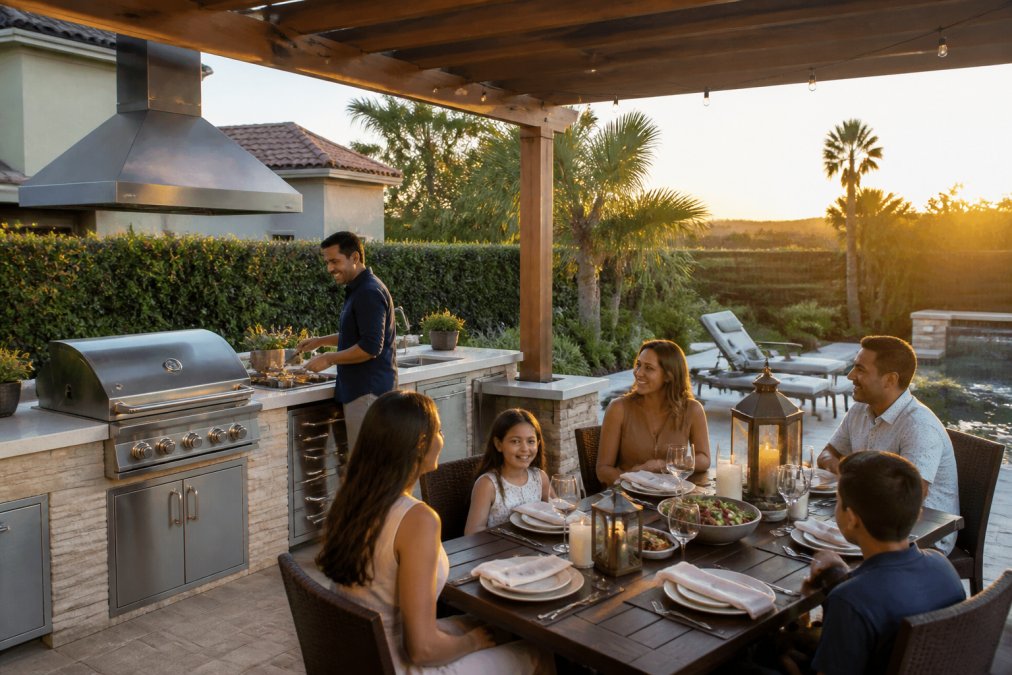
What makes these spaces work: proper spatial planning that separates the cooking zone from seating areas (at least 8 feet apart to avoid smoke drift), weather-resistant countertops, and integrated storage. Natural stone or composite materials handle South Texas heat without degradation. Pergolas or shade structures overhead reduce direct sun exposure on diners while keeping the cooking surface accessible.
Alpha Guard designs outdoor kitchens with intentional flow, counter height at 36 inches for comfortable food prep, and drainage solutions that prevent water pooling around the cooking area. The difference between a well-designed kitchen and a poorly planned one often comes down to how water moves across the hardscape after rain.
If you’re planning an outdoor kitchen, prioritize the location before selecting appliances. Placing the cooking zone on a slight slope (even 2-3%) dramatically improves drainage and prevents standing water that attracts mosquitoes and accelerates material degradation.
2. Wellness Zones and Backyard Saunas
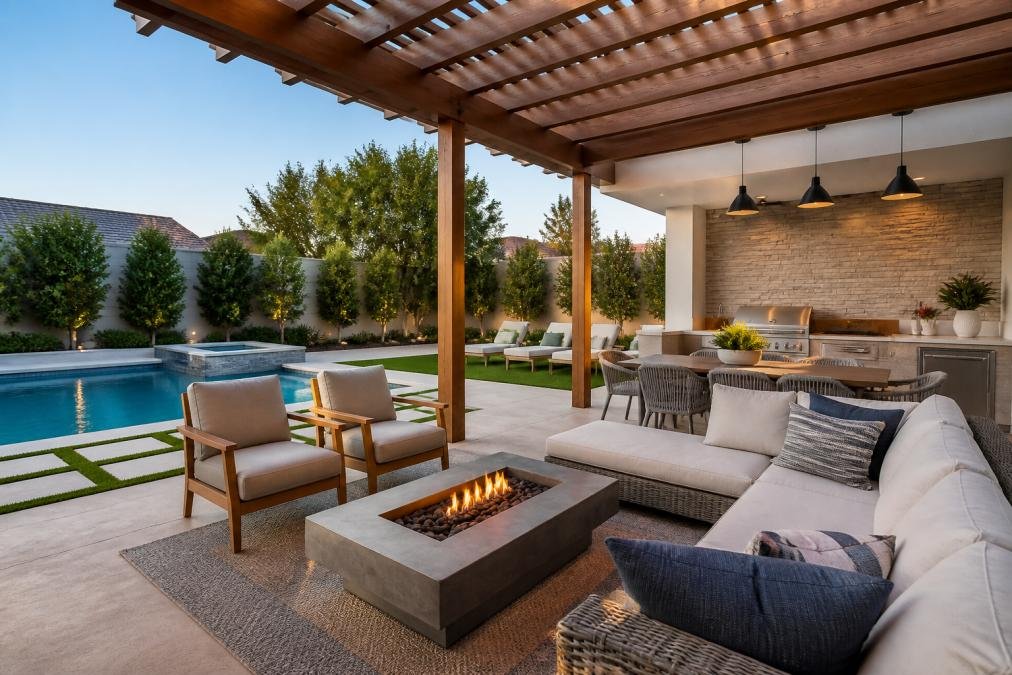
Wellness zones represent a significant shift in how homeowners view outdoor space, less entertaining stage, more personal retreat. These dedicated areas combine elements like fire features, meditation spaces, and increasingly, sauna installations that support year-round wellness routines.
Backyard saunas have transitioned from luxury amenities to practical health investments. A sauna creates a controlled environment for detoxification, muscle recovery, and stress relief without requiring trips to commercial facilities. Saunas require proper ventilation, electrical setup, and ideally, a small cooling area or outdoor shower nearby.
A Solo Stove Yukon 2.0 fire pit complements a wellness zone by providing a smokeless gathering point that doesn’t drive people indoors. The airflow system minimizes smoke while maximizing heat output, making it genuinely usable in the evening.
Wellness zones succeed when they’re intentionally separated from entertaining areas. A wellness retreat that doubles as a party zone satisfies neither function well.
Successful wellness zones require proximity to the home (close enough for regular use), protection from wind, and proper drainage so the area doesn’t become a mosquito breeding ground. Earthy textures and natural materials create the biophilic design elements that make these spaces psychologically restorative.
3. Sustainable and Native Landscaping
Sustainable landscaping has moved from environmental virtue signaling into practical necessity for South Texas homeowners. Native planting reduces water consumption by 50-70% compared to traditional ornamental landscapes while supporting local pollinators and requiring minimal chemical inputs (peer-reviewed research).
South Texas experiences extended drought periods, water restrictions, and intense summer heat. Drought-tolerant plants like Texas sage, esperanza, and native grasses thrive in these conditions without supplemental irrigation beyond the establishment period. Edible landscaping, incorporating fruit trees, herb gardens, and berry-producing shrubs, adds functional value while maintaining aesthetic appeal.
Softscaping (plants) and hardscaping (stone, mulch, pavers) work together in modern designs. Contemporary approaches use permeable hardscape materials, mulch layers that retain soil moisture, and plant selections that match the actual climate.
Native plants still need proper establishment care. The first growing season requires consistent moisture and attention. Many homeowners abandon native landscaping because they expect zero maintenance from day one.
A native landscape stabilizes after 2-3 years, requiring significantly less water, fertilizer, and pest management than traditional ornamental plantings (usda.gov).
4. Managing Drainage Issues in Outdoor Patio Designs
Drainage represents the invisible foundation of every successful outdoor space. Poor drainage causes standing water, accelerates material degradation, creates mosquito habitat, and eventually leads to structural failure of the patio itself.
Modern patio design integrates drainage from the start. The most common approach uses a combination of slope (minimum 1-2% grade away from structures), subsurface drainage systems, and surface solutions like channel drains.
The NDS Spee-D Channel Drain system addresses surface water management by collecting runoff along patio edges and directing it away from the space. Installation requires a slight slope toward the drain and proper grading, but the result is a functional outdoor space that doesn’t become a standing water problem after rain.
For subsurface drainage, proper base preparation matters significantly. A compacted base layer (4-6 inches of crushed stone) with perforated drainage pipe underneath allows water to move through the system rather than pooling beneath the patio surface. This prevents the freeze-thaw cycles that crack concrete and pavers.
Alpha Guard designs patios with intentional water management, evaluating your property’s natural drainage patterns and creating grading that moves water away from structures and sitting areas.
If your existing patio has drainage problems, don’t assume you need to remove and replace it. A channel drain installed along the low side often solves standing water issues for a fraction of full replacement cost.
5. Layered and Automated Outdoor Lighting
Outdoor lighting has evolved from basic floodlights into a design and functional system that extends usability into evening hours while creating ambiance.
Layered lighting uses multiple light sources at different heights and intensities. Ambient lighting (overhead pergola lights or string lights) provides general illumination. Accent lighting highlights landscape features or focal points. Task lighting illuminates specific areas like cooking zones or seating. This layering creates depth and visual interest while ensuring functionality after dark.
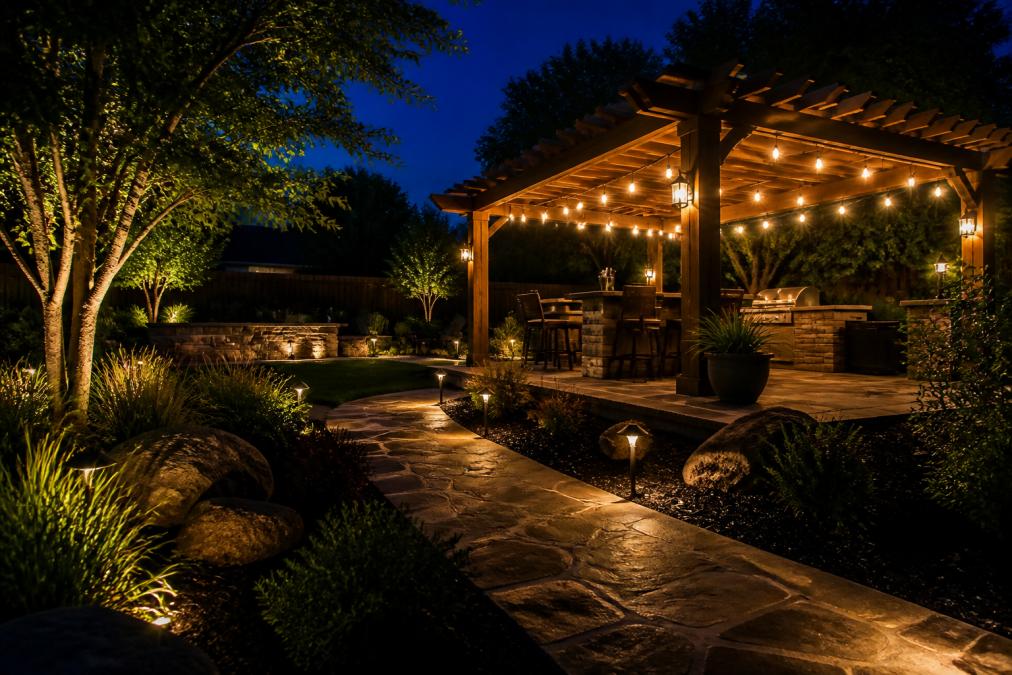
Automated systems like smart sprinkler controllers and lighting integrations are becoming standard. Rachio 3 Smart Sprinkler Controllers adjust watering based on real-time weather data, soil conditions, and plant type, eliminating overwatering while reducing water bills. Smart outdoor lighting systems can be programmed to activate at sunset, adjust brightness based on occupancy, and create scenes for different activities.
Irrigreen Smart Irrigation Systems use precision watering technology that reduces water consumption by up to 50% while maintaining landscape health (the EPA). This matters significantly in South Texas, where water costs are rising and drought restrictions increasingly affect residential properties.
Smart home integration for outdoor spaces is becoming the standard expectation. Homebuyers expect to control lighting, irrigation, and potentially heating through their phones.
6. Modern Hardscape Design Ideas
Hardscape, the non-plant elements like patios, pathways, pergolas, and shade structures, forms the functional skeleton of modern outdoor spaces. Contemporary hardscape design emphasizes purpose-driven layouts, natural materials, and seamless indoor-outdoor transitions.
Pergolas and pavilions have evolved into functional structures that manage sun exposure while creating defined outdoor rooms. SUNJOY Pergolas with adjustable canopy systems offer flexibility: you can open the canopy for full sun exposure or close it for shade and weather protection. This adaptability extends the usable season and accommodates different activities.
Modern hardscape design favors natural materials and earthy tones: flagstone, travertine, limestone, and composite pavers that mimic natural stone. These materials age gracefully and integrate visually with landscaping.
Contemporary designs often use multiple smaller hardscaped areas connected by pathways, with transitions managed through elevation changes, planting, or pergolas. This creates visual interest and allows different activities to coexist without interference.
7. Backyard Renovation Cost Estimation and Budget Planning
Understanding cost drivers helps you prioritize investments and avoid surprises during construction. Backyard renovation costs vary dramatically based on scope, material selection, and site conditions.
| Cost Component | Budget Range | Key Variables |
|---|---|---|
| Patio/Hardscape (per sq ft) | $15-$50+ | Material type, base prep, drainage |
| Outdoor Kitchen | Wide range | Appliances, countertops, utilities |
| Pergola/Shade Structure | $3,000-$15,000+ | Size, materials, customization |
| Landscaping/Softscape | $2,000-$10,000+ | Plant selection, installation, amendments |
| Lighting System | $1,500-$8,000+ | Complexity, automation, coverage area |
| Sauna/Wellness Features | $5,000-$25,000+ | Type, size, utilities, installation |
| Drainage Solutions | $500-$5,000+ | System complexity, labor intensity |
The largest cost drivers aren’t always visible: site preparation, drainage, utility work (gas lines, electrical, water), and labor. A beautiful patio built on inadequate base preparation will fail within 3-5 years.
Budget-friendly modernization focuses on high-impact changes that don’t require complete reconstruction. Adding lighting to an existing patio, installing a channel drain to fix drainage problems, or planting native species delivers significant improvements without massive expense.
Professional estimation matters because hidden site conditions affect cost. Soil composition, existing drainage patterns, utility locations, and accessibility for equipment all influence the final price. Alpha Guard provides free on-site estimates that identify these factors before work begins.
Financing options can make larger projects accessible, but understand the terms before committing. Alpha Guard offers affordable financing options, but verify terms with any contractor before signing.
Conclusion
Modern backyard renovation trends in 2026 reflect a fundamental realization: outdoor spaces are extensions of your home, not optional amenities. Resort-style kitchens, wellness zones, sustainable landscaping, proper drainage, smart lighting, thoughtful hardscape design, and realistic budget planning create outdoor environments that enhance property value and support your lifestyle.
The projects that succeed share common elements: intentional design that matches your actual use patterns, proper drainage and site preparation, durable materials appropriate for South Texas climate, and professional installation that guarantees structural workmanship.
Alpha Guard specializes in custom outdoor living spaces engineered for South Texas weather and built by certified, insured professionals. We handle everything from initial design and drainage planning through final installation. Get a free estimate today and discover how we can transform your outdoor space into the retreat you’ve been imagining.
=== FAQ ANSWERS (audit these too, same rules) ===
[1] Q: What are the most important backyard renovation trends for 2026?
A: The top modern backyard renovation trends for 2026 center on creating outdoor retreats with multiple purposes. Outdoor kitchens and dining areas, wellness zones like saunas, sustainable landscaping with native plants, smart automated lighting, and multi-functional hardscape designs are leading the way. These trends prioritize year-round living, intentional design, and durability. Each element serves a specific function while contributing to an overall aesthetic that blends indoor-outdoor living seamlessly.
[2] Q: How do I estimate costs for a backyard renovation project?
A: Backyard renovation cost estimation depends on several factors: the size of your space, materials selected, complexity of hardscaping and softscaping, whether you’re adding structures like pergolas or outdoor kitchens, and labor costs in your area. Start by identifying which trends align with your priorities, a simple patio refresh costs far less than adding an outdoor kitchen. Get quotes from certified professionals who can assess your specific property, including drainage needs and soil conditions. Many contractors offer free on-site estimates to provide accurate pricing tailored to your project scope.
[3] Q: What is biophilic design and why does it matter in backyard renovations?
A: Biophilic design incorporates natural elements, materials, and patterns into outdoor spaces to create a stronger connection with nature. In backyard renovations, this means using native plants, natural stone and wood, water features, and layered textures that mimic natural landscapes. This design approach reduces stress, improves air quality through native plantings, and creates spaces that feel intentional rather than artificial. It’s becoming essential because homeowners increasingly view their backyards as personal retreats for wellness and relaxation.
[4] Q: How can smart home integration improve my outdoor space?
A: Smart home integration brings convenience and efficiency to outdoor living. Automated lighting systems adjust brightness and color temperature based on time of day or activity. Smart irrigation systems like the Irrigreen Smart Irrigation System reduce water waste by up to 50% through weather-aware scheduling and precision watering. Smart controllers can integrate with voice assistants for hands-free control. These systems enhance both functionality and sustainability, making your outdoor space more comfortable year-round while reducing maintenance demands and utility costs.
Frequently Asked Questions
What are the most important backyard renovation trends for 2026?
The top modern backyard renovation trends for 2026 center on creating outdoor retreats with multiple purposes. Outdoor kitchens and dining areas, wellness zones like saunas, sustainable landscaping with native plants, smart automated lighting, and multi-functional hardscape designs are leading the way. These trends prioritize year-round living, intentional design, and durability. Each element serves a specific function while contributing to an overall aesthetic that blends indoor-outdoor living seamlessly.
How do I estimate costs for a backyard renovation project?
Backyard renovation cost estimation depends on several factors: the size of your space, materials selected, complexity of hardscaping and softscaping, whether you're adding structures like pergolas or outdoor kitchens, and labor costs in your area. Start by identifying which trends align with your priorities, a simple patio refresh costs far less than adding an outdoor kitchen. Get quotes from certified professionals who can assess your specific property, including drainage needs and soil conditions. Many contractors offer free on-site estimates to provide accurate pricing tailored to your project scope.
What is biophilic design and why does it matter in backyard renovations?
Biophilic design incorporates natural elements, materials, and patterns into outdoor spaces to create a stronger connection with nature. In backyard renovations, this means using native plants, natural stone and wood, water features, and layered textures that mimic natural landscapes. This design approach reduces stress, improves air quality through native plantings, and creates spaces that feel intentional rather than artificial. It's becoming essential because homeowners increasingly view their backyards as personal retreats for wellness and relaxation.
How can smart home integration improve my outdoor space?
Smart home integration brings convenience and efficiency to outdoor living. Automated lighting systems adjust brightness and color temperature based on time of day or activity. Smart irrigation systems like the Irrigreen Smart Irrigation System reduce water waste by up to 50% through weather-aware scheduling and precision watering. Smart controllers can integrate with voice assistants for hands-free control. These systems enhance both functionality and sustainability, making your outdoor space more comfortable year-round while reducing maintenance demands and utility costs.
This article was written using GrandRanker