
Table of Contents
- Why Professional Fence Installation Services in McAllen Matter
- Best Fencing Materials for South Texas Climate
- McAllen Fence Permit Requirements You Need to Know
- Average Cost of Fence Installation Per Foot in McAllen
- How to Choose a Fencing Contractor in McAllen
- The Fence Installation Process: From Site Assessment to Final Inspection
- Fence Repair, Maintenance, and Long-Term Protection in McAllen
- Conclusion
Last Updated: August 5, 2026
Why Professional Fence Installation Services in McAllen Matter
Professional fence installation services in McAllen are a long-term investment in property value, security, and peace of mind. A fence installed incorrectly costs far more to fix than it would have to do correctly the first time.
South Texas presents unique conditions: relentless UV exposure, high humidity, occasional high winds, and caliche-heavy soil that makes post setting a technical challenge. A contractor unfamiliar with these conditions will set posts too shallow, choose materials that degrade quickly, or skip the concrete footings necessary for storm season durability.
A fence that fails along your property line creates liability questions. One that violates local building permits can trigger fines and forced removal. One installed by an unlicensed contractor with no insurance leaves you holding the bill if something goes wrong.
This guide covers everything McAllen homeowners need to know: the best materials for South Texas climate, permit requirements, cost factors, how to vet a contractor, and what the installation process actually looks like from first site assessment to final inspection.
Residential vs. Commercial Fencing: Key Differences
Residential fencing is designed primarily for privacy, curb appeal, and defining property lines. Common choices in McAllen include wood privacy fence panels, vinyl fencing, and ornamental wrought iron.
Commercial fencing prioritizes security, access control, and durability under heavier use. Chain link with barbed wire topping, heavy-gauge wrought iron, and reinforced gate systems are standard for commercial properties in the RGV service area.
Installation requirements differ significantly. Commercial projects typically require engineered drawings, heavier post gauges, and complex gate hardware. Residential projects have more flexibility but still require permits and HOA compliance where applicable.
Best Fencing Materials for South Texas Climate
Choosing the right fencing material for McAllen comes down to how it will hold up under sustained heat, UV exposure, and periodic heavy rainfall. The wrong material degrades structurally, loses corrosion resistance, and ultimately fails.
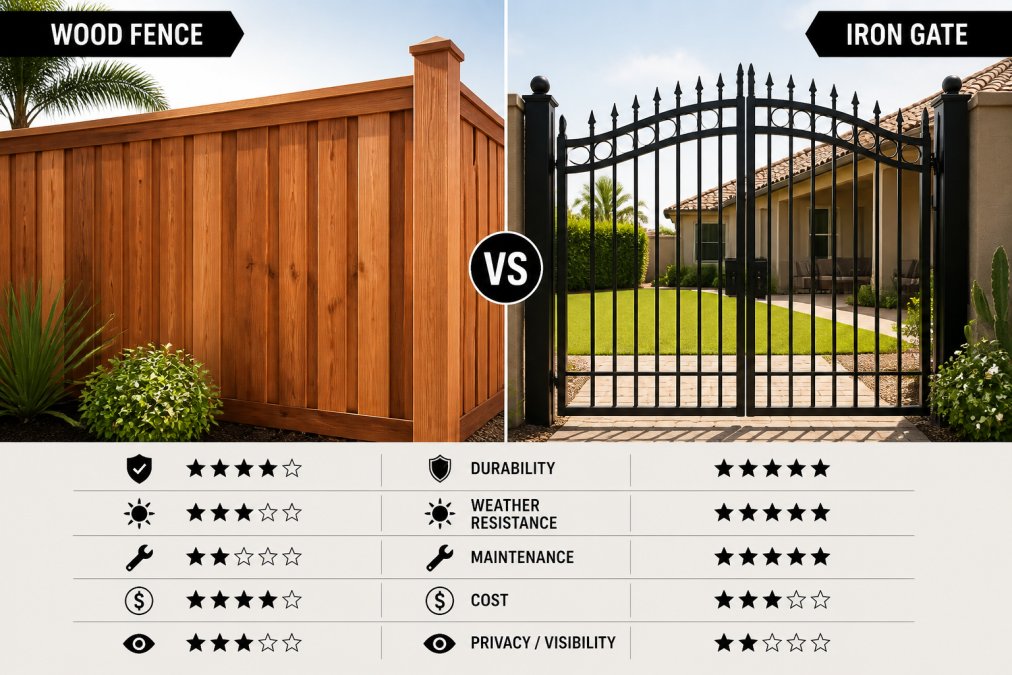
Here’s how the most common options compare for the local climate:
| Material | Heat/UV Performance | Corrosion Resistance | Maintenance Level | Best For |
|---|---|---|---|---|
| Pressure Treated Lumber | Moderate | Low (needs treatment) | High | Privacy, budget projects |
| Cedar Wood | Good | Moderate | Moderate | Privacy, aesthetics |
| Vinyl Fencing | Excellent | Excellent | Low | Low-maintenance privacy |
| Chain Link | Excellent | Moderate (galvanized) | Low | Security, commercial |
| Wrought Iron | Good | Low (needs coating) | High | Curb appeal, security |
| Aluminum | Excellent | Excellent | Very Low | Decorative, pool fencing |
Wood Privacy Fence and Pressure Treated Lumber
Wood privacy fence remains one of the most requested options in McAllen, offering genuine privacy, a natural look, and design flexibility. The trade-off is maintenance. Untreated wood in South Texas heat will crack, warp, and gray out within a few seasons.
Pressure treated lumber rated for ground contact is essential for fence posts. Posts not rated for ground contact will fail at the base within a few years. Fence staining every two to three years protects against UV damage and moisture infiltration and is the single most common factor in extending wood fence life in McAllen.
Cedar is worth the premium over standard pine for board-on-board privacy fence panels. Its natural oils provide better resistance to warping and insect damage in humid South Texas conditions.
Vinyl, Chain Link, and Wrought Iron Options
Vinyl fencing is the low-maintenance choice for homeowners who want a clean, consistent look without annual upkeep. It doesn’t rot, doesn’t need painting or staining, and handles UV exposure well when manufactured with titanium dioxide UV inhibitors. The limitation is impact resistance; vinyl can crack under significant force in high-wind areas.
Chain link is practical for residential applications where security and visibility matter more than privacy. Galvanized chain link holds up well in the RGV climate. Vinyl-coated chain link adds corrosion protection and comes in colors that blend better with landscaping.
Wrought iron delivers the highest curb appeal and is ideal for front yards and entryways. Iron rusts without proper coating, and South Texas humidity accelerates that process. A quality powder coat finish applied at the factory significantly extends service life, though periodic inspection and touch-up remain necessary.
McAllen Fence Permit Requirements You Need to Know
McAllen fence permit requirements catch many homeowners off guard. The City of McAllen requires building permits for most fence installations, with rules varying based on fence height, location, and zoning classification. According to the City of McAllen Development Services Department, permits are required for fences exceeding certain height thresholds defined by zoning district.
The general framework includes:
- Fences in front yards are typically limited to lower maximum heights than rear and side yard fences
- Corner lot fences have additional setback requirements to maintain sight lines for traffic safety
- Masonry walls and fences attached to structures may require separate structural review
- Pool fencing must comply with Texas Health and Safety Code requirements for barrier height and gate self-latching mechanisms
HOA regulations add another layer. Many McAllen subdivisions have deed restrictions governing fence materials, colors, and heights independently of city code. A fence that passes city permit review can still violate HOA rules, requiring removal at the homeowner’s expense.
Never assume your neighbor’s fence matches what you’re allowed to build. Always verify your specific permit requirements with the City of McAllen before breaking ground.
Before any installation, a reputable contractor should pull required permits and call 811 to have underground utilities marked. Texas law requires this, and failing to do so before digging creates serious liability exposure if a utility line is damaged.
Average Cost of Fence Installation Per Foot in McAllen
The average cost of fence installation per foot in McAllen varies considerably based on material choice, fence height, site conditions, and scope of work. Because professional contractors base quotes on full site assessment, request a free estimate rather than rely on generic per-foot figures.
What Drives the Final Price
Material selection is the largest single variable. Wrought iron and custom fabrication cost more per linear foot than chain link or standard wood privacy fence. Vinyl falls in the middle range.
Site conditions matter significantly. Caliche soil in South Texas requires more effort to dig post holes, sometimes requiring powered augers or jackhammer work. Rocky or heavily rooted soil adds labor time and equipment costs.
Fence height directly affects material volume and post depth requirements. An 8-foot privacy fence uses roughly 60% more material than a 6-foot version and requires deeper concrete footings.
Terrain and grade changes require additional planning. A sloped yard needs either stepped fence panels or racked panels that follow the grade, both adding complexity and labor.
Gate installation adds cost beyond the fence run itself. A single walk gate is straightforward; a double drive gate with an automated opener involves hardware, electrical work, and post reinforcement.
Debris removal after installation is sometimes quoted separately. Confirm whether your contractor’s price includes hauling away old fence materials and excavation debris before signing.
According to the National Association of Home Builders cost guidance, fencing consistently ranks among the top exterior improvement investments for residential properties in terms of return on investment at resale.
How to Choose a Fencing Contractor in McAllen
The most important question to ask is not "how much?" It’s "can you show me proof of insurance and your Texas contractor registration?" A contractor who hesitates on either is a contractor to avoid.
Verifying Licensing, Insurance, and Workmanship Guarantees
Texas does not require a specific state-level fence contractor license, but general contractors performing work above certain thresholds must comply with local registration requirements. Any contractor working on your property should carry both general liability insurance and workers’ compensation coverage. According to the Texas Department of Insurance guidelines for homeowners, homeowners can be held liable for injuries to uninsured workers on their property.
Ask for the certificate of insurance directly, not a verbal assurance. A legitimate contractor will provide it without hesitation.
Beyond insurance, look for:
- Written, itemized quotes that specify materials, linear footage, post depth, and concrete footing specifications
- Clear payment terms that don’t require full payment upfront; a deposit is standard, but full payment before completion is a red flag
- Workmanship guarantees in writing, specifying what’s covered and for how long
- References from McAllen-area projects, local experience with caliche soil and RGV weather conditions matters
- Permit handling, a reputable contractor pulls the permits, not the homeowner
Ask specifically whether the contractor calls 811 before every dig. It’s legally required in Texas, but not every contractor does it consistently. A contractor who confirms this without prompting is demonstrating professional discipline.
Ask what happens if something goes wrong. How does the contractor handle a post that shifts after installation or a panel that warps within the first season? A contractor with genuine confidence in their work will have a clear answer.
The Fence Installation Process: From Site Assessment to Final Inspection
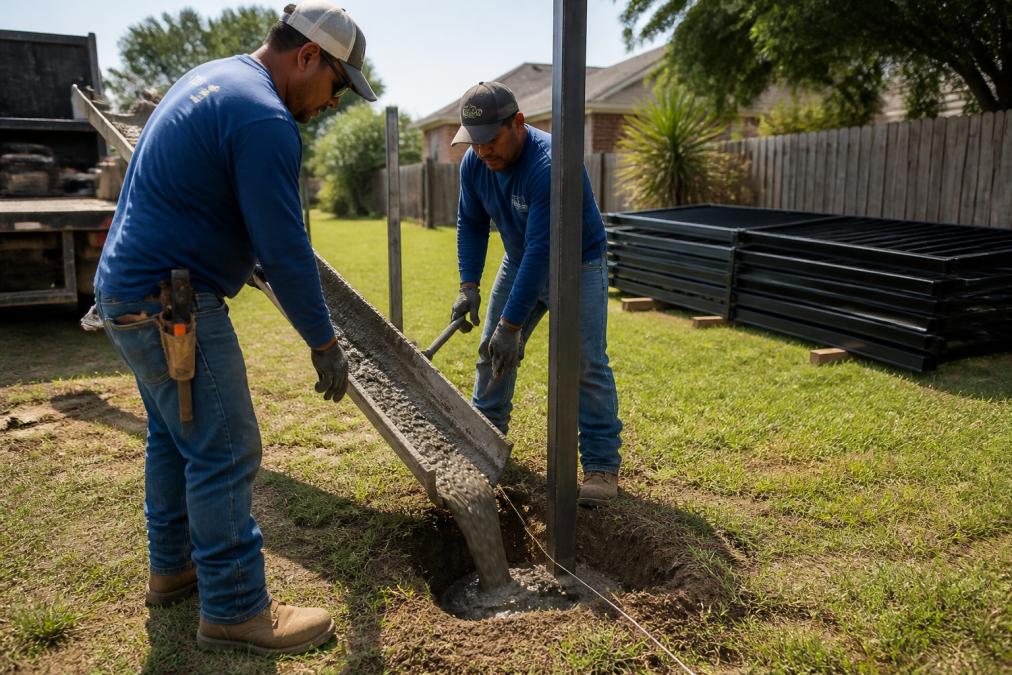
A professional fence installation in McAllen follows a defined sequence.
Step 1: Site Assessment
A thorough site assessment covers property line verification, soil conditions, grade changes, existing structures, and utility locations. This is where a good contractor identifies complications before they become surprises on installation day.
Step 2: Permit Application
Your contractor submits the permit application to the City of McAllen Development Services. Processing times vary; your contractor should give you a realistic timeline.
Step 3: 811 Utility Marking
Texas law requires calling 811 at least 48 hours before any digging. Utility companies mark underground lines with colored flags or paint. This step is non-negotiable.
Step 4: Post Setting
Posts are set in concrete footings to a depth that meets or exceeds local code requirements. In McAllen, caliche soil often requires powered augers. Post depth directly affects structural integrity; shallow posts are the most common cause of fence failure in high-wind events.
Step 5: Panel or Rail Installation
After concrete footings cure, typically 24 to 48 hours, panels or rails are attached. For wood privacy fence, this is where board spacing and alignment are set. For chain link, this is where tension is applied to the mesh.
Step 6: Gate Installation
Gates require precise alignment and hardware installation. A gate that swings freely and latches securely on day one should remain so after a year of use and ground movement.
Step 7: Final Inspection
The city inspector verifies that the installation meets permitted specifications. Your contractor should be present for this inspection and address any noted deficiencies immediately.
The full installation timeline for a standard residential fence in McAllen typically runs two to five business days from permit approval, depending on project size and soil conditions.
Fence Repair, Maintenance, and Long-Term Protection in McAllen
A well-installed fence still requires attention over time. South Texas conditions accelerate wear, and catching problems early prevents minor repairs from becoming full replacement projects.
The most common repair needs in McAllen include:
- Post rot or shift at ground level, particularly in wood fences where pressure treated lumber wasn’t used or has reached the end of its service life
- Panel warping or cracking in wood fences exposed to years of direct sun without regular staining
- Rust and coating failure on wrought iron or chain link in areas with poor drainage
- Gate misalignment caused by post movement or hardware wear
- Storm damage from high winds
Fence maintenance for South Texas should include an annual inspection of post stability, hardware tightness, and coating condition. Wood fences benefit from fence staining every two to three years. Wrought iron should be inspected for rust spots and touched up before corrosion spreads beneath the coating.
The Texas A&M AgriLife Extension guidance on wood preservation provides useful technical background on wood treatment and preservation methods relevant to outdoor structures in South Texas climates.
When repair needs are identified early, the cost is almost always a fraction of what full replacement would run.
| Maintenance Task | Frequency | Primary Benefit |
|---|---|---|
| Annual post stability check | Every year | Catch shifting before structural failure |
| Fence staining (wood) | Every 2-3 years | UV and moisture protection |
| Hardware inspection and tightening | Every year | Gate alignment and security |
| Rust inspection (iron/chain link) | Every year | Prevent corrosion spread |
| Full professional inspection | Every 3-5 years | Identify hidden wear |
Frequently Asked Questions
Do I need a permit for a fence in the city of McAllen, Texas?
Yes, most fence projects in McAllen require a permit from the City of McAllen Development Services Department. Requirements vary based on fence height, material, and location relative to your property line. Fences taller than six feet typically trigger stricter review. If your property falls under an HOA, additional approval may be needed before you can even apply with the city. A licensed contractor familiar with local building codes can pull the permit on your behalf and ensure your installation passes inspection.
What are the most popular fencing materials for McAllen homes?
Wood privacy fences built with pressure treated lumber, vinyl fencing, chain link, and wrought iron are the most common choices among McAllen homeowners. South Texas heat and humidity push many residents toward vinyl and wrought iron because of their corrosion resistance and low maintenance demands. Wood remains popular for privacy and curb appeal, especially when properly stained and sealed. Chain link suits commercial properties and large perimeters where cost per linear foot matters more than aesthetics. The best choice depends on your budget, security needs, and HOA rules.
How do I verify that a fence contractor in Texas is licensed and insured?
Texas does not require a statewide license specifically for fence installation, but contractors performing broader construction work may need a general contractor registration depending on the municipality. Always ask for a current certificate of general liability insurance and workers' compensation coverage before signing any contract. Request the certificate directly from the insurer, not just a copy from the contractor. Confirm the policy is active and covers the full project period. Reputable professionals will provide this documentation without hesitation and carry guaranteed structural workmanship on their installations.
How long does a typical professional fence installation take in McAllen?
Most residential fence installations in McAllen take one to three days once materials are on site and permits are approved. Larger commercial projects or custom fabrication work can extend the timeline to one to two weeks. The permit approval process through the City of McAllen adds time before work begins, sometimes several business days. Weather, site conditions such as rocky soil requiring deeper concrete footings, and material availability all affect the final installation timeline. Ask your contractor for a written schedule before work starts.
Fencing projects in McAllen require local knowledge, proper permitting, and materials chosen for South Texas conditions, not generic solutions from a catalog. Alpha Guard brings certified and insured professionals to every project, backed by guaranteed structural workmanship and affordable financing options that make quality accessible. Get a Free Estimate from Alpha Guard and protect your property with a fence built to last.
This article was written using GrandRanker