
Table of Contents
- How to Match Financing Options for Home Repairs to Your Project Size
- HELOC vs Personal Loan for Home Repairs: A Side-by-Side Comparison
- Cash-Out Refinancing and Home Equity Loans: When They Make Sense
- Government Grants for Home Repairs and Federal Assistance Programs
- Emergency Home Repair Assistance for Low Income Homeowners
- Home Improvement Loan Requirements You Need to Meet Before Applying
- The Hidden Costs of Home Repair Financing Most Borrowers Miss
- Credit Cards and Contractor Financing for Smaller Repairs
Last Updated: August 4, 2026
Choosing the right financing options for home repairs can save you thousands of dollars in interest, prevent project delays, and protect your property’s long-term value. At Alpha Guard, we work with McAllen homeowners who face the same challenge: a roof that needs replacing, a fence that’s failing, or a renovation project that can’t wait, but a budget that needs a plan. The financing landscape in 2026 offers more paths than ever, but more options also means more ways to choose poorly. This guide cuts through the noise and helps you match the right funding method to your actual situation.
How to Match Financing Options for Home Repairs to Your Project Size
The single most important variable in choosing home repair financing is project scale. Small repairs, mid-size renovations, and large structural overhauls each have a natural financing match, and forcing the wrong product onto the wrong project creates unnecessary cost and risk.
Decision Matrix: Small, Mid-Size, and Large Renovation Projects
A common mistake is applying for a home equity loan to patch a small section of fence, or putting a full roof replacement on a credit card. Both decisions carry penalties, whether in the form of unnecessary closing costs or crushing interest rates.
Use this matrix to orient your decision before you talk to any lender:
| Project Size | Estimated Scope | Best Financing Match | Key Consideration |
|---|---|---|---|
| Small (minor repairs) | Limited scope, urgent fix | Credit card with 0% intro APR or contractor financing | Pay off before promo period ends |
| Mid-size (single system) | One major system or room | Personal loan or HELOC draw | Compare origination fees carefully |
| Large (whole-home or structural) | Full renovation, roof, or addition | Home equity loan, cash-out refi, or FHA 203(k) | Factor in closing costs and appraisal fees |
| Emergency repair | Immediate safety risk | Emergency assistance programs or personal loan | Speed of funding matters most |
Secured debt makes sense when the project is large enough to justify the closing costs, the appraisal, and the longer repayment term. Unsecured options are faster and simpler, but they charge for that convenience through higher interest rates.
Get a detailed contractor estimate before you apply for any financing. Lenders use this to verify project scope, and it protects you from scope creep during the project. Alpha Guard provides written estimates upfront so you know exactly what you’re financing.
HELOC vs Personal Loan for Home Repairs: A Side-by-Side Comparison
A home equity line of credit is a revolving credit line secured by your home’s equity, while a personal loan is an unsecured, fixed-term installment loan. A HELOC typically offers a lower interest rate because your home serves as collateral, but your home is at risk if you default, and variable-rate draws mean your monthly payment can shift. Personal loans carry a fixed-rate structure, making budgeting more predictable, but the interest rate will generally be higher because there’s no collateral backing the loan.

Pros and Cons of Secured vs. Unsecured Loans
Home Equity Line of Credit (HELOC):
- Pros: Lower interest rate, flexible draws as needed, interest may be tax-deductible for qualifying improvements
- Cons: Variable-rate risk, closing costs, appraisal required, home is collateral, takes longer to fund
Personal Loan:
- Pros: Fast funding, fixed-rate, no collateral required, no appraisal or closing costs
- Cons: Higher interest rate, shorter repayment term, borrowing power limited by credit score and debt-to-income ratio
For projects where you can’t predict the final cost, a HELOC’s revolving structure is useful. For projects with a firm contractor estimate, a personal loan’s fixed-rate predictability often wins. If you’ve built significant equity, a HELOC’s rate advantage is substantial.
Cash-Out Refinancing and Home Equity Loans: When They Make Sense
Cash-out refinancing replaces your existing mortgage with a new, larger loan, and you receive the difference in cash. This makes sense when current interest rates are lower than your existing mortgage rate, or when you need a large lump sum and want to consolidate into a single monthly payment. The risk is that you’re resetting your amortization clock and extending the total life of your debt.
Home equity loans are second mortgages that sit behind your primary mortgage, carry a fixed-rate structure, and deliver a lump sum. They’re cleaner than cash-out refinancing when you want to leave your primary mortgage untouched. The closing costs are real, though, often running several percentage points of the loan amount, so the project needs to justify them.
Never use cash-out refinancing to fund cosmetic upgrades that don’t add to your home’s appraised value. You’re trading long-term equity for short-term aesthetics, and that’s a trade that rarely pays off.
Both options require a solid credit score and a debt-to-income ratio that satisfies the lender’s eligibility criteria. According to the Consumer Financial Protection Bureau’s mortgage guidance, lenders typically want to see a combined loan-to-value ratio that leaves meaningful equity in the property after the new loan closes.
Government Grants for Home Repairs and Federal Assistance Programs
Government-backed programs are the most underused financing tool in residential home repair, primarily because most homeowners don’t know they exist or assume they won’t qualify.
The federal government operates several programs specifically designed to help homeowners fund repairs and improvements:
- HUD Section 203(k) Rehabilitation Mortgage: Allows buyers and existing homeowners to finance both the property and renovation costs in a single FHA-backed loan. Useful for large structural repairs.
- USDA Section 504 Home Repair Program: Provides loans and grants to very low-income rural homeowners for repairs that eliminate health and safety hazards.
- Community Development Block Grants (CDBG): Administered at the local level, these grants fund housing rehabilitation programs in eligible communities.
- Weatherization Assistance Program: Federally funded, state-administered program that helps income-eligible households reduce energy costs through home improvements.
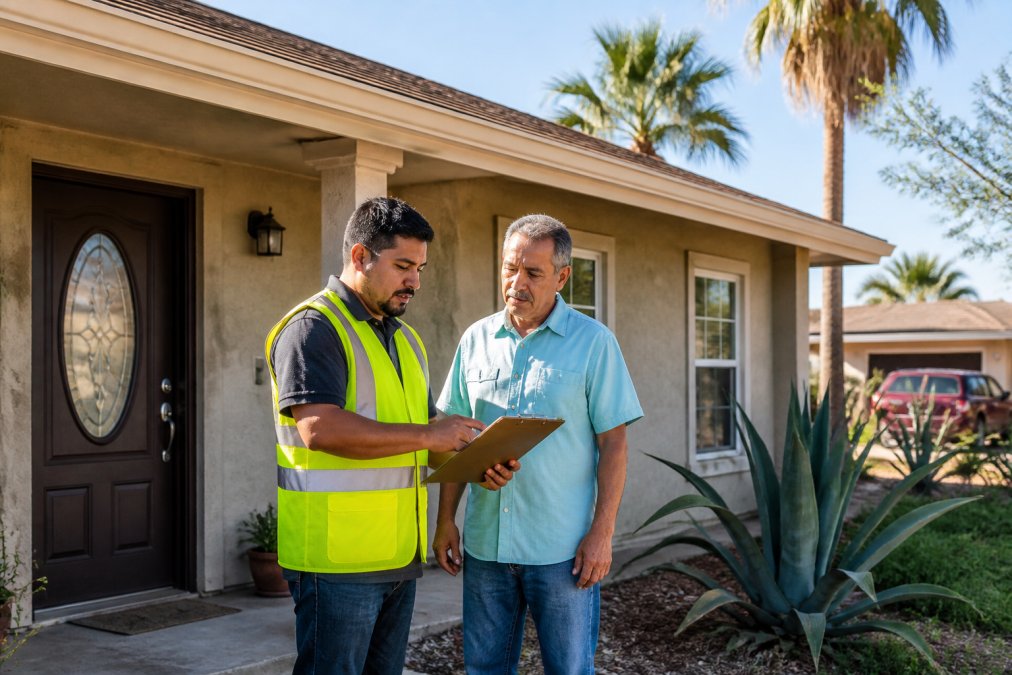
For Texas homeowners specifically, the Texas Department of Housing and Community Affairs administers several state-level programs that supplement federal funding. As documented in HUD’s home improvement and repair assistance resources, eligibility for most federal programs is tied to household income, property location, and the nature of the repair. Government grants for home repairs don’t need to be repaid, which makes them categorically different from every other option on this list.
Emergency Home Repair Assistance for Low Income Homeowners
Emergency home repair assistance programs exist specifically for situations where waiting isn’t an option: a roof that’s actively leaking, a heating system that’s failed, or structural damage that creates a safety risk.
Financing for Low-Credit Borrowers: What Your Options Actually Are
Low credit scores don’t eliminate your financing options for home repairs. They do narrow them, and they shift the cost structure.
FHA Title I Property Improvement Loans: These are government-backed loans for home improvements that don’t require equity. The FHA insures the loan, which means lenders can extend credit to borrowers who wouldn’t qualify for conventional products.
USDA and HUD grant programs: Income-based, not credit-score-based. If you meet the income threshold, your credit history is less of a barrier.
Secured personal loans: Using a vehicle or other asset as collateral can help borrowers with lower credit scores access better rates than unsecured alternatives.
Contractor financing: Many contractors partner with financing companies that specialize in home improvement lending. These programs sometimes have more flexible eligibility criteria than traditional banks, though rates can be higher.
Emergency home repair assistance for low income homeowners is primarily income-based, not credit-score-based. Programs like USDA Section 504 and local CDBG-funded initiatives can fund critical repairs without requiring strong credit history.
Home Improvement Loan Requirements You Need to Meet Before Applying
Lenders evaluate four variables simultaneously, and a weakness in any one of them can derail an application or significantly increase your rate.
The four variables lenders examine:
- Credit score: Conventional home improvement loans generally require a minimum score in the mid-600s, though FHA-backed products have lower thresholds. A higher score translates directly to a lower interest rate.
- Debt-to-income ratio: Most lenders want your total monthly debt obligations to remain below a set percentage of your gross monthly income after adding the new loan payment.
- Home equity: For secured products like HELOCs and home equity loans, the loan-to-value ratio must stay within the lender’s guidelines after the new loan is added.
- Proof of income: Stable, verifiable income is required for all loan types. Self-employed borrowers may need additional documentation.
According to the Federal Trade Commission’s consumer guidance on home equity loans, borrowers should shop at least three lenders before committing, because rates and fees vary significantly even for the same credit profile. The origination fee deserves specific attention. On a personal loan, this fee is often deducted from the disbursement, meaning you receive less than the loan amount.
The Hidden Costs of Home Repair Financing Most Borrowers Miss
The advertised interest rate is rarely the full cost of borrowing. Most borrowers focus on the monthly payment and miss the total cost of the loan over its full repayment term.
The hidden costs that actually matter:
- Origination fees: Charged upfront on personal loans and some HELOCs. Can add meaningful cost to the total loan amount.
- Closing costs: Required for home equity loans and cash-out refinancing. These include appraisal fees, title search, and lender fees.
- Prepayment penalties: Some loan products charge a fee if you pay off the loan early.
- Variable-rate risk: A HELOC with a low initial rate can become significantly more expensive if rates rise during the draw period.
- Annual fees: Some HELOCs charge an annual maintenance fee regardless of whether you draw on the line.
Tax Implications of Home Improvement Financing
Interest paid on home equity loans and HELOCs may be tax-deductible when the funds are used to "buy, build, or substantially improve" the taxpayer’s home, subject to current IRS limits. This deductibility does NOT apply when home equity debt is used for personal expenses unrelated to the property. Personal loan interest is not deductible.
For a large renovation project financed through a home equity product, the after-tax cost of borrowing is lower than the nominal interest rate suggests. Consult a tax professional to confirm eligibility for your specific situation.
Credit Cards and Contractor Financing for Smaller Repairs
For small, urgent repairs where the total cost fits within a manageable credit limit, credit cards and contractor financing deserve serious consideration. Many credit cards offer 0% APR introductory periods, typically ranging from 12 to 21 months. If you can pay off the balance within that window, you’ve effectively borrowed money at zero cost. The risk is the deferred interest clause: some cards apply retroactive interest to the full original balance if you carry any amount past the promotional period.
Contractor financing programs work differently. Contractors partner with lending companies to offer point-of-sale financing at the time of project agreement. These programs are convenient, but the interest rates can be higher than what you’d access through a bank or credit union. The benefit is speed: approval is typically fast and the process is integrated into the contracting workflow. The rate you’re quoted in contractor financing is often negotiable, particularly for larger projects.
For McAllen homeowners working with Alpha Guard on roofing, fencing, or outdoor living projects, financing options are built into the project conversation from the start. Our certified and insured professionals provide detailed estimates so you know exactly what you’re financing before any paperwork is signed.
A useful resource for comparing your options objectively is the CFPB’s guide to borrowing basics for home improvement, which covers the rights and protections available to borrowers across different loan types.
Home repair financing is rarely a one-size-fits-all decision, and the cost of choosing the wrong product can exceed the cost of the repair itself. Alpha Guard’s certified and insured professionals serve McAllen homeowners with transparent project estimates, guaranteed structural workmanship, and financing options designed to make quality home care accessible without locking you into unfavorable terms. If you’re planning a roofing, fencing, or outdoor living project and want to understand your financing path before committing, get a free estimate from Alpha Guard today.
Frequently Asked Questions
What is the best type of loan to get for home repairs?
The best financing option for home repairs depends on your equity position, credit score, and project size. Homeowners with substantial equity often benefit from a HELOC or home equity loan because interest rates tend to be lower than unsecured options. For smaller or urgent repairs where speed matters, a personal loan or credit card may be more practical. Reviewing your debt-to-income ratio and the total cost of borrowing, including origination fees and closing costs, helps identify the most affordable path.
How do personal loans compare to HELOCs for home repairs?
A personal loan is unsecured, meaning your home is not used as collateral. Approval is faster, but interest rates are typically higher and repayment terms are shorter. A HELOC is a variable-rate equity line of credit secured against your home, which usually means lower rates and a longer draw period. The tradeoff is that a HELOC requires an appraisal, takes longer to fund, and puts your property at risk if you default. For large renovation projects, a HELOC often costs less overall; for emergency repairs, a personal loan is quicker.
Can I get a government grant for home repairs?
Yes, several federal programs offer grants or low-interest loans for qualifying homeowners. The USDA Section 504 Home Repair program provides grants to very low-income rural homeowners aged 62 and older to remove health and safety hazards. HUD's Community Development Block Grant program funds local agencies that assist low-income households. Eligibility criteria vary by program, income level, location, and property type. Contact your local housing authority or HUD-approved housing counselor to find programs available in your area.
What is the 504 home repair program?
The USDA Section 504 Home Repair program, also called the Single Family Housing Repair Loans and Grants program, helps very low-income homeowners in rural areas repair, improve, or modernize their homes. Loans are available up to a set limit for general repairs, while grants are reserved for homeowners aged 62 and older who cannot repay a loan. Funds must be used to remove health or safety hazards. Applicants must meet income eligibility criteria and own and occupy the property. Applications are processed through local USDA Rural Development offices.
What if I cannot afford my home repairs?
Several paths exist for homeowners facing financial hardship. Federal and state programs like the USDA Section 504 program and HUD-backed emergency home repair assistance for low income households can cover critical repairs at little or no cost. Nonprofit organizations and local community action agencies also offer repair assistance. If you have some equity, a HELOC or FHA Title I loan may provide accessible financing even with a lower credit score. Getting a detailed contractor estimate first helps clarify exactly how much funding you actually need before applying.
What home improvement loan requirements do most lenders check?
Most lenders review your credit score, debt-to-income ratio, home equity or collateral, employment history, and the loan-to-value ratio of your property. For secured loans like a HELOC or home equity loan, an appraisal is typically required to confirm your home's current market value. Unsecured personal loans focus more heavily on credit score and income. FHA Title I loans have more flexible credit requirements but still require proof of ownership and the ability to repay. Gathering a contractor estimate and a clear project budget before applying strengthens your application.
This article was written using GrandRanker