
Table of Contents
- Why Heat-Resistant Fencing Matters
- Heat Resistant Fence Materials: Top Options Compared
- Does Vinyl Fence Melt in Sun? What You Need to Know
- Thermal Expansion and Structural Integrity
- Maintenance Tips for Fences in Hot Climates
- Reflective vs. Absorptive Coatings: Heat Management Strategy
- Choosing the Right Fencing Solution for Your Climate
- Conclusion
Last Updated: August 15, 2026
Why Heat-Resistant Fencing Matters
Heat warps wood, cracks composite materials, and causes thermal expansion that separates panels from posts. The best fencing solutions for heat are engineered to handle these extremes without losing integrity or requiring constant repairs.
Most homeowners pick a fence based on appearance or initial cost, then watch it degrade over five years as thermal expansion, UV degradation, and moisture-heat cycles compound. A fence that costs 20% more upfront but lasts twice as long is economical, not expensive.
Alpha Guard has worked with homeowners facing this problem. The difference between a fence that survives a decade and one that fails in three comes down to material selection and installation quality. We’ll walk you through the materials that actually perform in extreme heat, the specific features that matter, and how to maintain whatever you choose.
Heat Resistant Fence Materials: Top Options Compared
The material you choose determines how your fence behaves under thermal stress. Not all heat-resistant options perform equally.
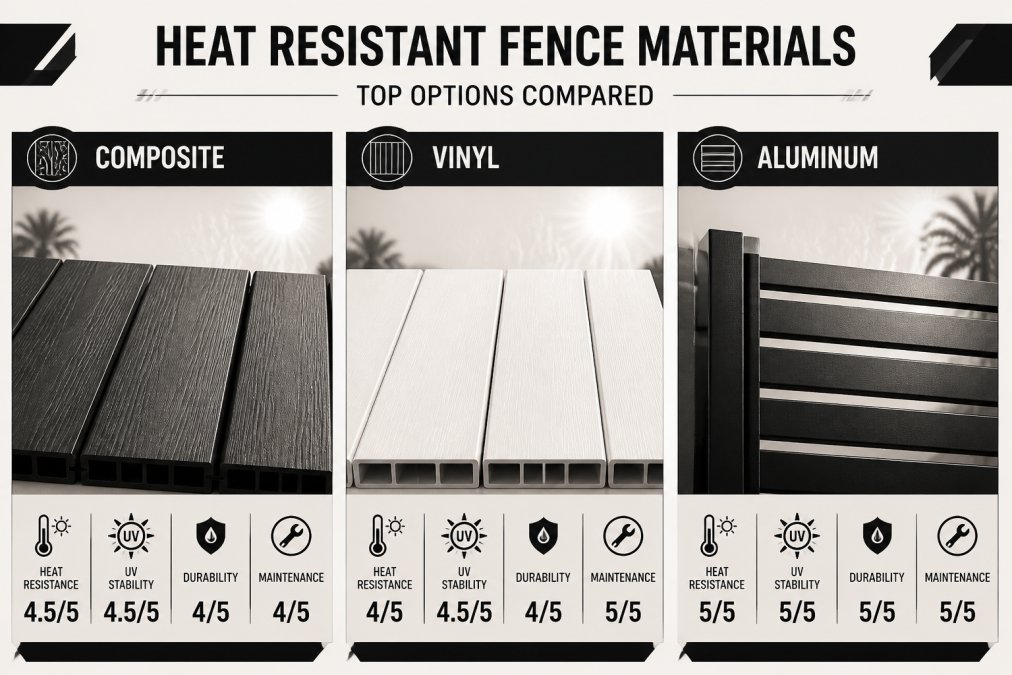
Composite Fencing (Trex & Fiberon)
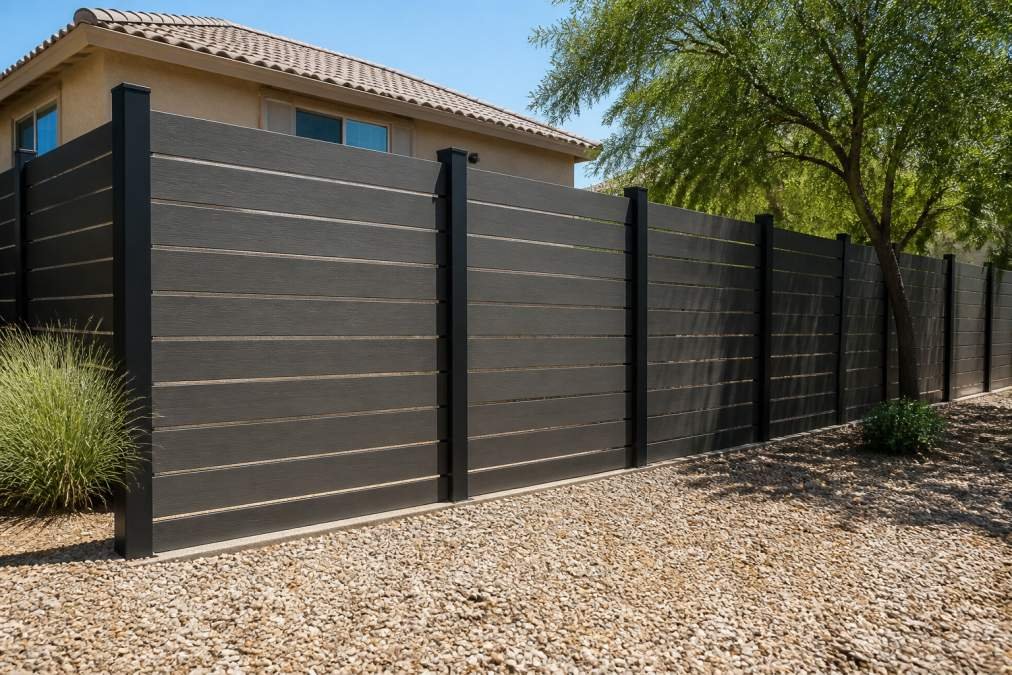
Composite fencing combines recycled wood fibers with plastic polymers to create a material that resists warping, cracking, and fading under intense UV exposure. Unlike wood, it won’t splinter or rot. Unlike vinyl, it maintains structural integrity without becoming brittle.
Trex Seclusions Fencing uses muted earth tones engineered to resist color fading. The material resists warping and cracking under heat, with UV-resistant coatings protecting against discoloration. Most composite fences carry 20-25 year warranties. The tradeoff: composite can experience slight surface fading over several years of direct sun exposure, and upfront costs run higher than traditional wood or some vinyl options.
Fiberon’s PermaTech cap layer shields against both moisture and infrared radiation. The co-extruded UV-resistant coating reduces surface temperature in high-heat zones, directly addressing thermal expansion concerns. This engineering matters in desert climates where surface temperatures can exceed 140 degrees.
Composite fencing works best for: Homeowners prioritizing durability and low maintenance over 20+ years.
Pros:
- Excellent dimensional stability despite temperature fluctuations
- Resists rot, splinters, and insect damage
- Eco-friendly, using recycled materials
Cons:
- Higher upfront cost than wood or basic vinyl
- Can experience slight surface fading over time
- Requires occasional cleaning to prevent residue buildup
Vinyl Fencing (CertainTeed Bufftech)
Vinyl fencing is engineered from PVC with high thermal tolerance. Quality vinyl won’t warp, twist, or lose shape even when surface temperatures exceed 130 degrees. Light-colored vinyl panels actively reflect sunlight rather than absorbing it, reducing heat radiation into your yard.
CertainTeed Bufftech resists UV damage and maintains color stability without painting or staining. The material is moisture-proof, preventing rot and pest damage. Maintenance amounts to occasional cleaning with mild soap and water.
High-quality vinyl like Bufftech won’t melt at typical residential temperatures. Premium vinyl has a melting point around 212 degrees Fahrenheit, well above any temperature your fence will reach. Lower-grade vinyl can soften or discolor under prolonged exposure, which is why material grade matters more than the material itself.
Vinyl fencing works best for: Homeowners in hot, humid climates who want minimal maintenance and light-colored aesthetics.
Pros:
- Excellent UV and heat resistance
- Does not rot, splinter, or attract pests
- Easy to clean and maintain
Cons:
- Lower-quality vinyl can discolor or soften under extreme conditions
- Less privacy than solid materials without infill options
Aluminum & Steel Options
Aluminum and steel dissipate heat quickly rather than storing it, preventing the internal stress that causes warping in other materials.
Jerith Aluminum Fencing forms a protective oxide layer that prevents corrosion, making it ideal for coastal or humid environments. The low coefficient of thermal expansion means structural deformation stays minimal even with large temperature swings. The material is non-combustible, a significant advantage in fire-prone zones.
ColorMax Steel Fencing combines steel strength with modern design. Steel doesn’t ignite, warp, or melt when exposed to fire, making it superior for wildfire-prone areas. Steel maintains its shape at higher temperatures than aluminum.
FenceTrac’s Steel Frame System pairs galvanized and powder-coated steel frames with aluminum infill rated ASTM E84 Class A for fire resistance. The system withstands winds up to 150 mph while offering customizable infill options.
SLEEKFENCE Aluminum Fencing achieves the highest fire resistance rating on the market, ASTM E136 and E84 Class A. With a melting point of 1220 degrees Fahrenheit, it’s proven to withstand significant fire exposure without contributing to spread.
Metal fencing works best for: Fire-prone regions, coastal properties, or situations where structural integrity under extreme temperature swings is non-negotiable.
Pros (Aluminum):
- Resistant to rust and corrosion
- Maintains structural stability across temperature swings
- Does not rot, splinter, or attract insects
Cons (Aluminum):
- Can get hot to the touch in direct sunlight
- May not offer full privacy without infill
Pros (Steel):
- Superior fire resistance compared to other materials
- Durable and low maintenance
- Termite resistant
Cons (Steel):
- Steel can get hot in the sun, though it holds shape better than aluminum
- May require professional installation due to weight
Reflective coatings on metal fencing can reduce surface temperature by 15-20 degrees compared to standard finishes. Light colors (Coastal Grey, Cream) outperform dark finishes in heat management.
Does Vinyl Fence Melt in Sun? What You Need to Know
Quality vinyl won’t melt at temperatures your fence will actually experience. Vinyl’s melting point is approximately 212 degrees Fahrenheit for standard PVC. In the hottest climates, vinyl surface temperatures might reach 140-160 degrees in direct sun, well below the melting threshold.
What can happen with low-quality vinyl is softening, discoloration, or slight warping, but not melting. Premium vinyl products like CertainTeed Bufftech are formulated with UV stabilizers and heat-resistant additives that prevent even softening.
Budget vinyl without proper UV protection can fade rapidly, become brittle, or develop surface cracks as UV radiation breaks down the polymer chains. Over time, brittleness increases the risk of cracking under mechanical stress, wind, impact, or thermal expansion cycles.
If you’re considering vinyl, invest in premium options with documented UV and heat resistance. Budget vinyl in extreme climates is a false economy, you’ll replace it in 5-7 years instead of 15-20.
Thermal Expansion and Structural Integrity
Every fence material expands when heated and contracts when cooled. Thermal expansion matters because it creates internal stress. If panels can’t move freely, stress concentrates at connection points, eventually causing failure.
Composite materials experience moderate thermal expansion. A 100-foot composite fence panel can expand up to 1.5 inches across a 60-degree temperature swing. Professional installation includes expansion gaps at posts and connections.
Vinyl expands more than composite, approximately 2-3 inches per 100 feet across the same temperature range. This is manageable if installers account for it with hardware designed to accommodate movement without binding.
Aluminum has the lowest thermal expansion coefficient of all common fencing materials. A 100-foot aluminum fence expands less than 0.5 inches across the same temperature swing. This is why aluminum performs so well in extreme climates.
Steel expansion falls between aluminum and composite. The advantage is steel’s tensile strength, which allows it to handle the stresses that thermal expansion creates.
Posts must be set deep enough to prevent heaving, and hardware must allow for expansion without binding. A fence installed correctly can handle thermal expansion. A fence installed without accounting for it will fail within a few seasons.
Improper installation that doesn’t allow for thermal expansion is one of the top reasons fences fail in hot climates. Even premium materials fail if installed incorrectly. This is why [certified, insured installation matters](/how-to-verify-contractor-insurance/), professionals understand these requirements.
Maintenance Tips for Fences in Hot Climates
The fence you choose determines your maintenance burden. No fence is truly maintenance-free, but some require significantly less work than others.
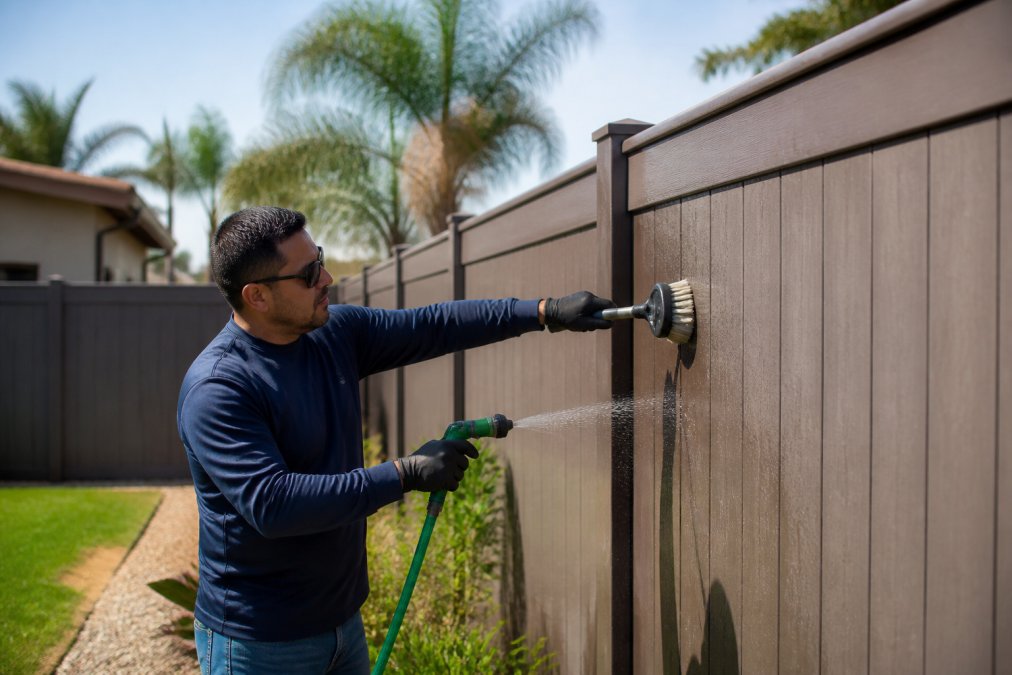
Composite fencing requires periodic cleaning to prevent residue accumulation. Dust, pollen, and organic material can settle on the surface, intensifying fading. A soft brush and mild soap solution twice yearly keeps the fence looking its best. Avoid pressure washing, which can damage the surface. Composite doesn’t need sealing or staining.
Vinyl fencing is the lowest-maintenance option. Occasional cleaning with a soft cloth and mild detergent removes dirt and algae. Pressure washing is safe at low pressure (under 1500 PSI) if needed. Vinyl requires no sealing, staining, or painting.
Aluminum fencing requires minimal maintenance. The oxide layer that forms naturally protects against corrosion. Periodic cleaning with mild soap removes dust and salt deposits in coastal areas. Inspect hardware connections annually to ensure they remain tight after temperature swings.
Steel fencing with powder-coated finishes requires similar maintenance to aluminum. Inspect annually for damage and touch up scratches promptly to prevent rust development.
For all materials, clean seasonally, inspect connections annually, and address damage promptly. A small crack repaired immediately doesn’t become a structural failure.
Heat accelerates degradation of coatings and sealants. In extreme climates, plan to refresh protective coatings every 5-7 years rather than every 10-15 years in moderate climates.
Reflective vs. Absorptive Coatings: Heat Management Strategy
The color and finish of your fence directly affects how much heat it absorbs and radiates. Light-colored finishes reflect solar radiation, reducing surface temperature by 15-20 degrees compared to dark finishes. BarrierBoss Corrugated Metal Fence Panels in Coastal Grey and Cream actively help keep surrounding areas cooler.
Reflective coatings work by bouncing infrared radiation away from the surface. The best reflective materials are light in color and have a matte or semi-gloss finish that scatters light rather than concentrating it.
Absorptive finishes, darker colors and matte textures, absorb solar radiation and convert it to heat. The fence surface gets hot, and that heat radiates into your yard. In extreme climates, this can make outdoor spaces uncomfortable during peak hours. However, absorptive finishes often look more sophisticated and hide dirt better than light finishes.
If you want to actively reduce heat in your yard and don’t mind light colors, reflective finishes are superior. If aesthetics lean toward darker tones, accept that the fence will absorb more heat and plan maintenance accordingly. Some materials, like Fiberon’s PermaTech cap, are engineered to reduce heat absorption even in darker colors through infrared-reflective coatings.
Light-colored, reflective finishes reduce surface temperature and yard heat. Dark, absorptive finishes get hotter but often look better. Choose based on your priorities, then select materials engineered for the finish you choose.
Choosing the Right Fencing Solution for Your Climate
Your climate zone determines which materials perform best.
In extreme heat climates (summer highs consistently above 100 degrees), composite fencing with engineered heat resistance like Fiberon’s PermaTech or premium vinyl with documented UV protection outperform basic options. Aluminum fencing is an excellent alternative if you prioritize fire resistance or coastal salt exposure.
In moderate heat climates (summer highs 85-100 degrees), standard composite, quality vinyl, or aluminum all perform adequately. The choice can lean more toward aesthetics and maintenance preference.
In fire-prone regions, steel or aluminum with fire-rated certifications are non-negotiable. SLEEKFENCE Aluminum with ASTM E84 Class A rating or FenceTrac’s steel frame system with fire-rated aluminum infill provide measurable safety beyond standard materials.
In coastal or humid climates, aluminum or steel with corrosion-resistant coatings outperform composite, which can absorb moisture and develop mildew.
Identify your climate’s specific stressors (heat, fire, salt, humidity), then select materials engineered for those conditions. Don’t compromise on material quality or installation expertise. Alpha Guard works with homeowners to assess climate-specific challenges and recommend solutions backed by guaranteed structural workmanship. Our certified and insured professionals understand how thermal expansion, UV degradation, and moisture-heat cycles affect different materials in local conditions.
| Material | Best Climate | Heat Tolerance | Maintenance | Lifespan | Fire Resistance |
|---|---|---|---|---|---|
| Composite (Fiberon) | Extreme heat | Excellent | Periodic cleaning | 20-25 years | Moderate |
| Vinyl (CertainTeed) | Hot, humid | Excellent | Minimal | 15-20 years | Low |
| Aluminum (Jerith) | Coastal, fire-prone | Very good | Minimal | 20+ years | High |
| Steel (ColorMax) | Fire-prone | Excellent | Moderate | 20+ years | Excellent |
| Hybrid (FenceTrac) | Fire-prone, extreme weather | Excellent | Minimal | 20+ years | Excellent |
Conclusion
The best fencing solutions for heat aren’t one-size-fits-all. They’re determined by your specific climate stressors, aesthetic priorities, and maintenance tolerance. Composite materials like Fiberon excel in extreme heat through engineered thermal management. Premium vinyl like CertainTeed performs reliably with minimal upkeep. Metal options, aluminum and steel, handle thermal expansion and fire risk better than organic materials.
The fence you install today should last 15-20 years with proper maintenance. That lifespan depends on material selection and installation quality in equal measure. A premium material installed poorly fails faster than a standard material installed correctly.
Alpha Guard delivers certified and insured installation with guaranteed structural workmanship. We assess your property’s specific heat, humidity, and weather challenges, then recommend fencing solutions engineered for those conditions. Our affordable financing options make durable installations accessible. Get a free estimate and let our team show you why proper installation matters as much as material choice.
Frequently Asked Questions
What type of fence material is most resistant to heat damage?
Composite fencing (Trex, Fiberon) and high-quality vinyl (CertainTeed Bufftech) rank highest for heat resistance. Both resist warping and cracking under extreme temperatures. Aluminum also performs well due to high thermal conductivity and low coefficient of thermal expansion. Composite materials excel because UV-resistant coatings and co-extruded layers shield against infrared radiation, maintaining structural integrity through temperature fluctuations.
Does vinyl fencing warp in extreme heat?
Premium vinyl fencing like CertainTeed Bufftech is engineered to resist warping, twisting, and shape loss in extreme heat. However, lower-quality vinyl without proper UV protection can soften or discolor under prolonged sun exposure. The key is choosing high-grade, UV-resistant vinyl. Light-colored panels perform better than dark shades because they reflect sunlight rather than absorb it, reducing surface temperature and stress on the material.
How do temperature swings affect fence longevity?
Thermal expansion and contraction cycles stress fence materials, causing warping, cracking, and brittleness over time. Materials with low coefficients of thermal expansion (like aluminum and quality composites) maintain dimensional stability better. Moisture-heat cycles accelerate degradation in wood and lower-grade materials. Composite and vinyl options with proper installation hardware accommodate these fluctuations, extending lifespan to 20-25 years in hot climates.
What maintenance tips help fences last longer in hot climates?
Clean your fence regularly with soft brushes and water to remove dust and residue that can intensify fading and heat absorption. Inspect hardware and post-setting annually, as thermal stress loosens fasteners. For composite and vinyl, avoid power washing, which can damage UV-protective coatings. Ensure proper airflow circulation around fence panels to reduce heat island effects. Apply reflective coatings if available for your material type to reduce surface temperature and UV degradation.
Are metal fences better than wood for hot climates?
Metal fences (aluminum and steel) significantly outperform wood in hot climates. Wood warps, cracks, and becomes brittle under thermal expansion cycles and UV degradation. Metal maintains structural integrity and doesn't rot or splinter. Aluminum dissipates heat quickly and resists corrosion. Steel holds its shape at higher temperatures but can get hot to the touch. For durability and weather resistance in extreme heat, metal and composite materials are superior choices to traditional wood.
This article was written using GrandRanker