
Table of Contents
- South Texas Backyard Alternatives: What Works for Your Climate
- Patio Covers and Pergola Structures for Year-Round Usability
- Custom Outdoor Kitchen Contractors and BBQ Island Setup
- Swimming Pool and Water Feature Integration
- Low-Maintenance Landscaping Ideas for Durability
- DIY vs. Professional Contractor Cost Analysis
- Permitting and Zoning Regulations for Backyard Projects
- Sustainable Water Management in Outdoor Spaces
Last Updated: August 16, 2026
South Texas Backyard Alternatives: What Works for Your Climate
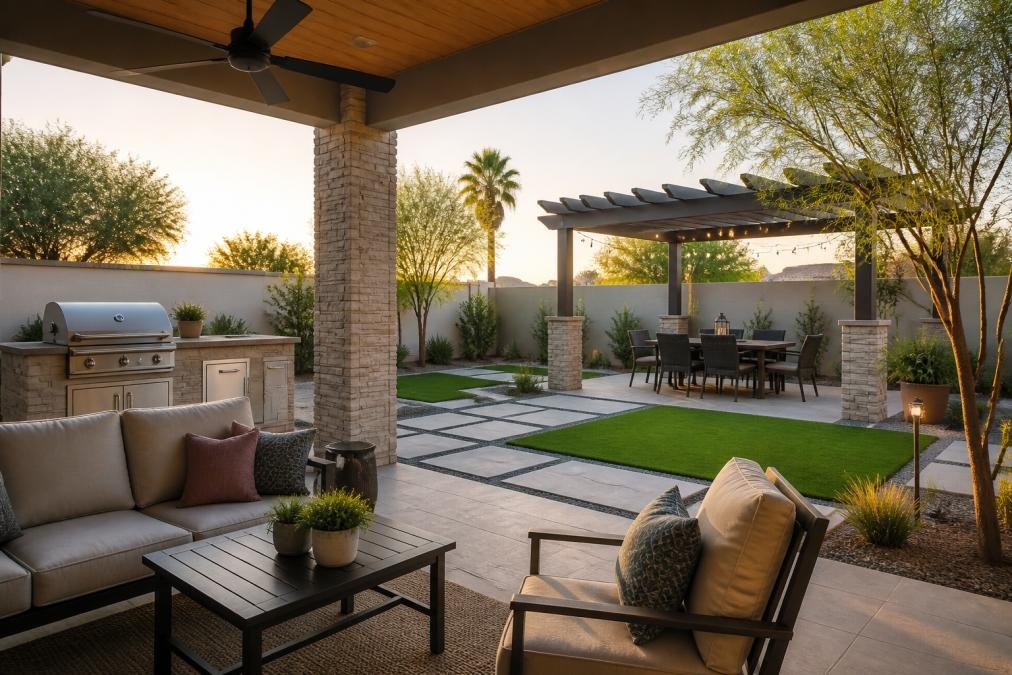
Building functional outdoor living space in South Texas requires understanding the region’s extreme heat, intense sun exposure, and occasional severe weather. The best alternatives combine durable materials, strategic shade structures, and water-efficient landscaping designed specifically for this climate.
At Alpha Guard, we’ve helped hundreds of McAllen-area homeowners create outdoor spaces that function year-round. The difference between a backyard that thrives and one that deteriorates comes down to three factors: material selection, professional installation, and climate-appropriate design. This guide walks you through every major South Texas backyard alternative, from patio covers to native plantings, with honest assessments of what works, what requires professional help, and what trade-offs you’ll face.
A poorly chosen material can fade, crack, or warp within three years. An undersized shade structure won’t solve the heat problem. A pool designed without proper drainage becomes a liability during flash storms. But when you get it right, choosing materials that withstand extreme heat, designs that account for intense sun angles, and contractors who understand South Texas specifically, your backyard becomes a genuine extension of your living space.
Patio Covers and Pergola Structures for Year-Round Usability
Patio covers and pergola structures solve the central problem: how to make outdoor space usable during brutal summer months. A well-designed shade structure can reduce surface temperatures by 20-30 degrees, transforming a space from unusable to comfortable.
Timber Frame Pergolas
Timber frame pergolas deliver classic aesthetics with solid functionality when built from the right species. In South Texas, you need wood that resists rot, insects, and UV damage: pressure-treated lumber, tropical hardwoods like ipe or cumaru, or composite materials that mimic wood appearance without maintenance burden.
Timber pergolas provide dappled shade, which is gentler than full sun while allowing air circulation. This matters in South Texas because full shade without airflow creates a sauna effect. The open slat design lets breezes flow through while filtering direct sunlight.
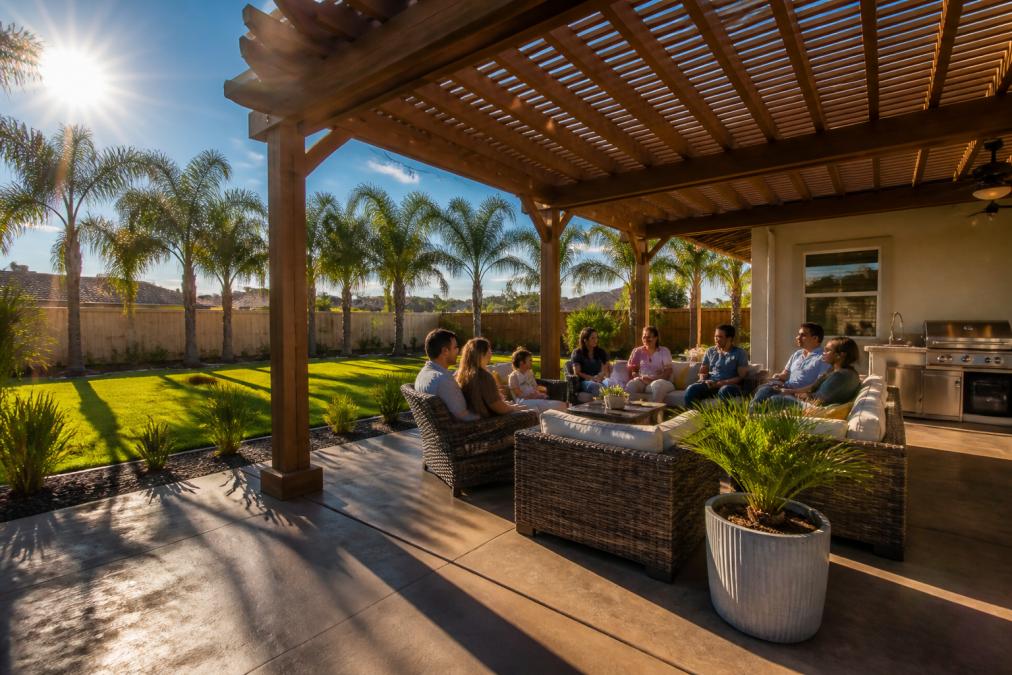
COVER Timberworks specializes in custom timber frame pergolas using computer-aided precision cutting and off-site pre-fabrication. Their approach reduces on-site installation time and ensures joints fit with minimal gaps, important because poor joinery leads to water pooling and accelerated wood degradation.
The trade-off with timber pergolas is maintenance. Even pressure-treated wood requires periodic staining or sealing every 2-3 years. Tropical hardwoods last longer but cost significantly more upfront. Composite pergolas eliminate maintenance entirely but lack the visual warmth of real wood.
Louvered Roof Systems
Louvered pergola systems offer adjustable shade, you control how much sun hits your space by opening or closing motorized louvers. This flexibility is valuable in South Texas because the sun angle changes dramatically throughout the day and seasons.
Outdoor Elements builds luxury louvered systems made in the USA with integrated lighting, heating, and motorized shades. These systems transform patios into climate-controlled outdoor rooms. Louvers can close completely during storms or intense afternoon heat, then open to allow passive heating on cooler days.
Louvered systems cost substantially more than fixed pergolas because of motorized components, weather sealing, and engineering. For homeowners who use outdoor space year-round, the added usability often justifies the investment. The systems also add significant property value.
Custom Outdoor Kitchen Contractors and BBQ Island Setup
An outdoor kitchen transforms your backyard into an entertainment destination. In South Texas, this means building with materials that won’t degrade under relentless heat and UV exposure, and designing with proper ventilation and drainage.
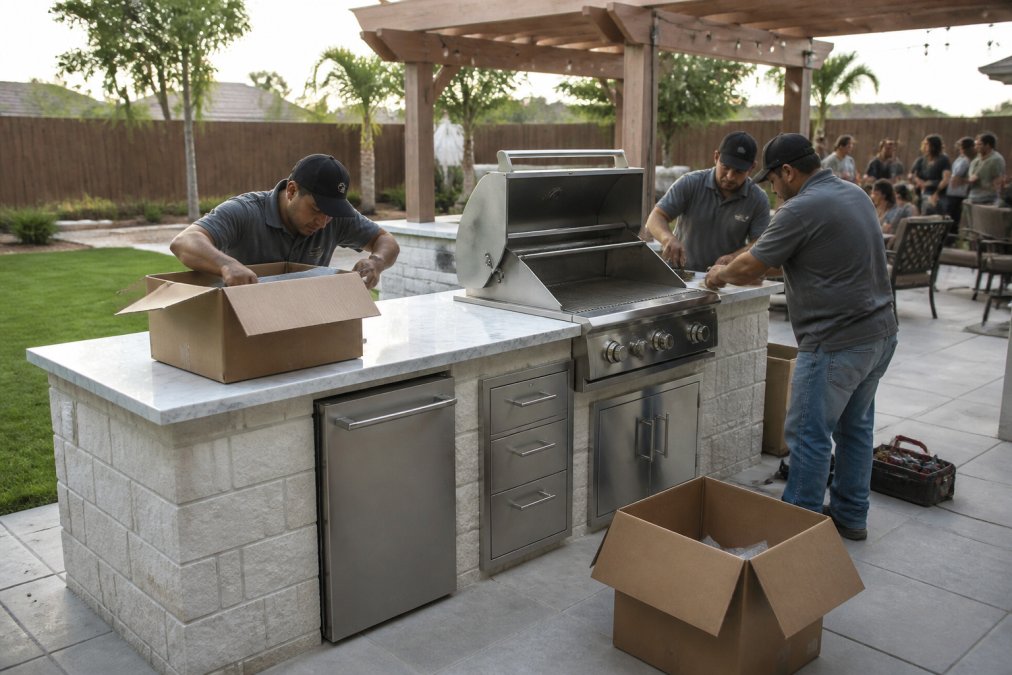
Core components are a grill, prep station, storage, and countertop space. Most outdoor kitchens also include a mini fridge, sink, and lighting. Materials matter enormously: stainless steel appliances resist corrosion better than painted steel, natural stone (granite, travertine) withstands heat better than composite materials, and sealed wood or composite cabinetry survives humidity and temperature swings better than unsealed options.
Alpha Guard offers custom outdoor kitchen design and installation, handling everything from gas line installation to electrical work for lighting and appliances, ensuring code compliance and safe operation.
C.S.W. Power Solutions in San Antonio builds custom outdoor kitchens with in-house licensed electricians, ensuring integrated lighting, fans, and outlets meet outdoor electrical requirements. This matters because improper outdoor electrical installation is a genuine safety risk.
The DIY approach saves money but introduces risks. Improper gas line connections, inadequate drainage, or electrical work that doesn’t meet code can create expensive problems quickly. Professional installation typically costs 2-3 times the material cost, but you get structural integrity, code compliance, and warranty coverage.
Swimming Pool and Water Feature Integration
A swimming pool directly addresses the heat problem. But pool design in this region requires specific considerations: intense sun degrades pool finishes faster, extreme heat increases water evaporation, and flash flooding demands proper drainage design.
Keith Zars Pools has built custom swimming pools across South-Central Texas since 1985, integrating pools with luxury landscape designs. Their experience with regional climate means understanding how to orient pools to minimize afternoon sun exposure, design decking that doesn’t become dangerously hot underfoot, and integrate drainage systems that handle both routine water and storm runoff.
Pool finishes matter. Plaster finishes are affordable but degrade faster under intense UV exposure. Aggregate finishes (like pebble finishes) last longer and stay cooler underfoot. Salt-chlorine systems reduce chemical maintenance compared to traditional chlorine.
Water features beyond pools, fountains, water walls, or decorative basins, add visual interest and provide evaporative cooling. In South Texas heat, the cooling effect of moving water is noticeable.
The permitting process for pools is more involved than most homeowners expect. You’ll need setback compliance, electrical inspection for pumps or lighting, and often a separate grading permit. Alpha Guard can guide you through these requirements and connect you with licensed contractors who handle permitting as part of their service.
Low-Maintenance Landscaping Ideas for Durability
Landscaping surrounding hardscape structures matters as much as the structures themselves. In South Texas, traditional lawn-heavy landscapes fail because they require constant watering in a climate that punishes thirsty plants.
Xeriscaping and Native Plant Selection
Xeriscaping, designing landscapes with drought-resistant plants, is the practical approach for South Texas. Native plants adapted to the region’s heat and periodic drought require minimal water once established and attract local wildlife.
Native options include esperanza (yellow flowering shrub), Texas lantana (colorful, butterfly-attracting), cenizo (pink flowering, heat-loving), and various native grasses like Gulf muhly. These plants thrive in intense heat, require minimal supplemental water after the first growing season, and look attractive year-round.
Green Oasis Landscaping specializes in xeriscaping using drought-resistant plants suited to South Texas climate. Their designs reduce water usage while maintaining visual interest through color, texture, and seasonal variation, also reducing maintenance time.
The shift from traditional landscaping to xeriscaping requires reframing what "attractive landscaping" means. Instead of expecting lush green lawns, you appreciate the sculptural forms of native shrubs, seasonal color variations, and wildlife activity.
Hardscaping Materials That Withstand Extreme Heat
Hardscaping requires material selection that accounts for South Texas heat and UV exposure. Concrete is affordable and durable but cracks in extreme temperature swings and becomes dangerously hot underfoot. Sealed concrete or concrete with light-colored aggregate reduces heat absorption. Pavers offer more visual interest and allow creative patterns. Natural stone like travertine, limestone, or granite withstands heat well and stays cooler underfoot.
Natural stone costs significantly more than concrete but lasts longer, looks better as it ages, and requires less maintenance. Concrete contractors typically charge moderate rates, making it the most accessible option for large areas.
DIY vs. Professional Contractor Cost Analysis
Simple landscaping, planting native shrubs and grasses, is genuinely DIY-friendly. You need a shovel, mulch, and plants. Cost savings are real: a professional landscaper might charge $3,000-5,000 for what you could do yourself for $500-1,000 in materials.
Hardscaping sits in the middle. Small projects like a simple patio might be DIY-viable if you’re comfortable with grading and base preparation. Larger projects or those requiring precise drainage design benefit from professional expertise. Mistakes in base preparation or slope lead to water pooling, cracking, and premature failure.
Structural projects like pergolas, outdoor kitchens, or pools require professional installation. These involve engineering, electrical work, gas line installation, or complex drainage design. Building permits typically require licensed contractor installation. Professional installation is 2-4 times the material cost, but you get code compliance, warranty coverage, and structural integrity.
The hidden cost of DIY mistakes is real. A poorly installed pergola that fails during a storm, an outdoor kitchen with improper gas connections, or a pool with drainage problems can cost thousands to fix. Professional installation includes liability insurance, protecting you if something goes wrong.
Alpha Guard’s team handles complex projects where mistakes are expensive: custom outdoor living spaces, roofing, and fencing. Their certified and insured professionals provide guaranteed structural workmanship. Get a Free Estimate and discuss your specific property needs.
Permitting and Zoning Regulations for Backyard Projects
Most homeowners underestimate permitting requirements. Depending on project scope, you may need building permits, electrical permits, and grading permits. Ignoring these requirements can result in fines, difficulty selling your property, or having to remove completed work.
Building permits are required for most permanent structures: pergolas, outdoor kitchens, pools, and shade structures. The permit process typically involves submitting plans, paying a fee, and scheduling inspections at key construction stages. Timeline usually adds 2-4 weeks to your project.
Zoning regulations govern setbacks, height restrictions, and lot coverage percentages. A pergola too close to your property line or exceeding height limits might need removal. Understanding these restrictions before design prevents costly redesigns.
Electrical permits are required for any outdoor electrical work. Licensed electricians understand code requirements and ensure safe installation. Gas line permits apply if you’re installing a grill or outdoor heater. Gas line work must be done by licensed professionals and inspected before use.
Most professional contractors include permitting as part of their service and handle the paperwork.
Sustainable Water Management in Outdoor Spaces
Water management is critical in South Texas because the region experiences both intense heat (driving evaporation) and occasional flash flooding (creating drainage challenges).
Irrigation design should include drip systems rather than spray irrigation. Drip systems deliver water directly to plant roots, reducing evaporation and waste. Smart controllers that adjust watering based on rainfall and temperature further reduce unnecessary water use. Native plants, once established, require minimal supplemental water.
Rainwater harvesting, capturing runoff from roofs or hardscape surfaces, provides free water for landscape irrigation. A simple rain barrel system can capture hundreds of gallons during summer storms, reducing reliance on municipal water.
Permeable hardscaping, using pavers with gaps or permeable concrete, allows water to infiltrate the ground rather than running off. This reduces flooding risk during heavy rains and recharges groundwater.
Drainage design for pools, patios, and other hardscape features should account for South Texas rainfall patterns. Proper grading ensures water flows away from structures, preventing foundation problems or water pooling. This is one area where professional design genuinely matters.
Building the right South Texas backyard requires understanding your climate, choosing durable materials, and often hiring professionals for complex work. The alternatives covered here address the core challenge of creating outdoor space that functions in extreme heat.
Alpha Guard specializes in designing and building custom outdoor living spaces tailored to South Texas conditions. Their certified and insured professionals handle everything from structural design to permitting, ensuring your investment is built to last. With guaranteed structural workmanship and affordable financing options, Alpha Guard makes it accessible to create the backyard you want. Get a Free Estimate and discuss your specific property needs with their team.
| Alternative | Best For | Key Consideration |
|---|---|---|
| Timber Pergola | Aesthetic shade with airflow | Requires periodic maintenance |
| Louvered System | Adjustable shade and climate control | Premium cost but year-round usability |
| Outdoor Kitchen | Entertainment and dining | Professional installation recommended |
| Swimming Pool | Direct heat relief and recreation | Significant permitting and drainage design |
| Native Landscaping | Low maintenance and sustainability | Requires mindset shift from traditional lawns |
| Hardscaping | Visual interest and durability | Material choice affects heat and maintenance |
Frequently Asked Questions
What should I look for when hiring a South Texas backyard contractor?
Look for licensed, insured professionals with specific experience in South Texas climate conditions and materials that withstand extreme heat and humidity. Ask for local references, verify their certifications, and request examples of completed projects in your area. Ensure they understand local permitting requirements and can provide detailed written estimates with clear scope definitions to avoid unexpected charges.
What are the best low-maintenance landscaping ideas for hot climates?
Xeriscaping with native, drought-resistant plants is ideal for South Texas. Consider ornamental grasses, desert-adapted shrubs, and groundcovers that require minimal watering once established. Combine plantings with hardscaping elements like mulch, stone, and pavers to reduce maintenance. These approaches reduce water usage by up to 50% while maintaining visual appeal and durability in intense heat.
How do I verify a landscaping contractor's license and insurance?
Request proof of current general contractor licensing from your state's licensing board and ask for certificates of liability and workers' compensation insurance. Verify the contractor's license number independently through your state's licensing authority website. Confirm that insurance covers both general liability and property damage, and ask for the contractor to be listed as the responsible party on all permits.
What permits do I need for backyard construction projects?
Permits vary by location but typically required for structures like pergolas, patios, pools, and outdoor kitchens. Check with your local city or county building department for specific requirements. Most jurisdictions require permits for structures over a certain size or height, electrical work, and plumbing. Professional contractors handle permit acquisition, which protects you by ensuring code compliance and proper inspections.
This article was written using GrandRanker