
Table of Contents
- Understanding Your Roof Replacement Financing Options
- Home Equity Loans and HELOCs for Roof Replacement
- Home Improvement Loans for Roofing Projects
- Roof Replacement Cost Estimates and Budget Planning
- Roofing Financing for Bad Credit and Alternative Options
- Government Grants and Cash-Out Refinancing
- Contractor Financing and 0% Interest Programs
- Comparing Financing Methods: Pros, Cons, and Total Cost
Last Updated: August 17, 2026
Understanding Your Roof Replacement Financing Options
A roof replacement is one of the largest home improvement expenses most homeowners face. Without proper planning, the cost can strain your finances or delay critical repairs. The good news: multiple financing options exist to make this essential project accessible.
Whether you’re dealing with storm damage, age-related deterioration, or preventive maintenance, understanding your financing choices helps you select the option that fits your budget, credit situation, and timeline. Each method carries different interest rates, repayment terms, and qualification requirements.
Alpha Guard works with homeowners throughout the region to help them navigate roof replacement costs and identify financing solutions for their specific circumstances. Below, we’ll walk you through home equity loans, personal loans, government programs, contractor financing, and other methods to fund your roof replacement project.
Home Equity Loans and HELOCs for Roof Replacement
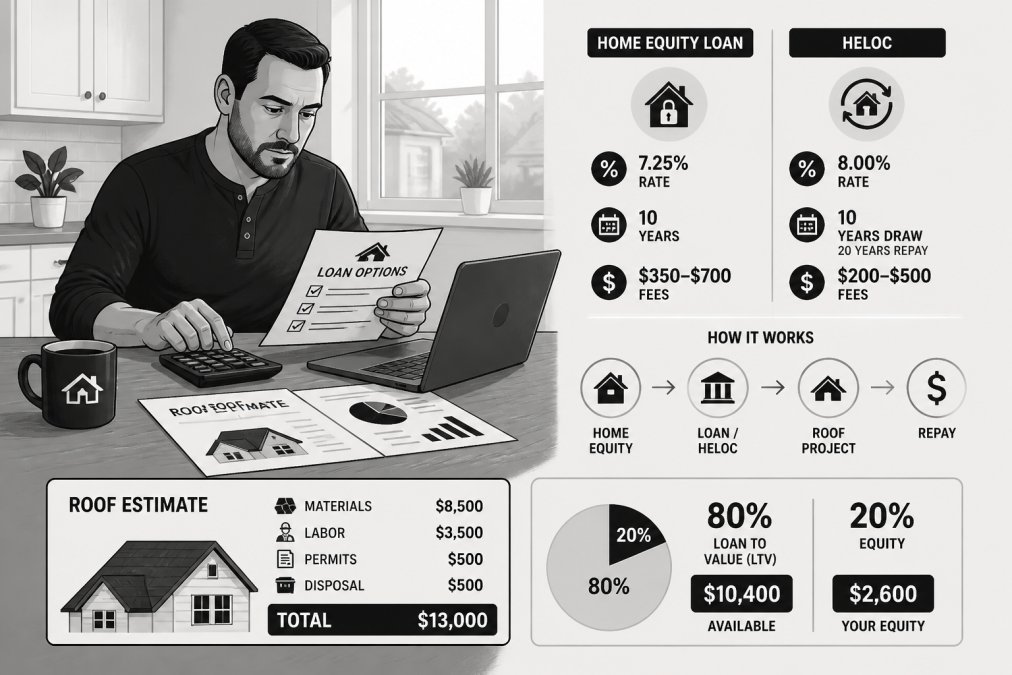
A home equity loan allows you to borrow against the equity you’ve built in your home. If your home is worth $300,000 and you owe $200,000 on your mortgage, you have $100,000 in equity available to borrow against. Lenders typically allow you to borrow up to 80-85% of your home’s total equity.
Home equity loans offer fixed interest rates and predictable monthly payments over 5-15 years. A Home Equity Line of Credit (HELOC) works differently, you get access to a revolving credit line and draw funds as needed, paying interest only on what you’ve borrowed. HELOCs typically feature variable interest rates tied to prime lending rates.
Pros of home equity loans and HELOCs:
- Lower interest rates compared to unsecured personal loans
- Potentially tax-deductible interest (consult a tax professional)
- Access to larger borrowing amounts
- Flexible repayment terms
Cons:
- Your home serves as collateral, putting it at risk if you default
- Closing costs and fees apply
- Longer approval timelines (7-14 days typical)
- HELOCs carry variable rates that can increase significantly
Home equity financing works best for homeowners with established equity, good credit scores, and stable income.
Home Improvement Loans for Roofing Projects
Personal home improvement loans are unsecured loans specifically designed for renovation and repair projects. Unlike home equity loans, these don’t require you to pledge your home as collateral. Lenders evaluate your creditworthiness based on credit score, income, and debt-to-income ratio.
Home improvement loans typically range from $5,000 to $50,000 with terms spanning 2-7 years. Because these loans are unsecured, interest rates run higher than home equity options but may be lower than general personal loans. Credit unions often provide competitive rates for members, sometimes 1-2% lower than banks.
Advantages of home improvement loans:
- No collateral required
- Faster approval (often 1-3 days)
- Fixed interest rates and predictable payments
- Straightforward application process
Disadvantages:
- Higher interest rates than secured home equity loans
- Lower borrowing limits
- Credit score significantly impacts approval and rates
- Prepayment penalties may apply with some lenders
Home improvement loans suit homeowners who lack sufficient home equity, prefer not to risk their home as collateral, or need faster funding.
Roof Replacement Cost Estimates and Budget Planning
Before selecting any financing option, understand what your project will actually cost. Roof replacement costs vary significantly based on square footage, roofing material, local labor rates, and roof complexity.
Get multiple written estimates from certified contractors. A detailed estimate should specify the roofing material, square footage, labor costs, permits, disposal fees, and warranty terms. Once you know your target amount, calculate monthly payments across different loan terms. A longer term means lower monthly payments but more total interest paid.
Consider the roof’s lifespan when evaluating total cost of ownership. A premium metal roof lasting 40+ years costs more upfront but spreads the expense across decades. An asphalt shingle roof lasting 15-20 years costs less initially but requires replacement sooner.
Emergency roof repairs often require faster financing decisions. Planned replacements allow time to explore multiple options and secure better terms.
Roofing Financing for Bad Credit and Alternative Options
If your credit score is below 620, traditional lenders may deny your application or offer unfavorable terms. Bad credit doesn’t eliminate roof replacement financing options, it just requires exploring alternatives.
Secured personal loans use collateral (savings account, vehicle) to reduce the lender’s risk. Credit union loans often feature more flexible credit requirements than banks. Peer-to-peer lending platforms sometimes approve applicants with lower credit scores, though rates may be higher.
Some roofing contractors partner with financing companies specializing in home improvement loans with more lenient credit requirements. However, carefully review interest rates and terms, as contractor financing occasionally carries higher costs than direct lender options.
If possible, spend 3-6 months improving your credit before applying for roof replacement financing. Paying down existing debt, correcting credit report errors, and making on-time payments boost your score and unlock better rates. Even a 50-point improvement can reduce your interest rate by 1-2%.
Government Grants and Cash-Out Refinancing
Cash-out refinancing allows you to refinance your mortgage for more than you owe and receive the difference in cash. This typically offers lower rates than other borrowing methods because the loan is secured by your home. The drawback: refinancing resets your mortgage clock, extending your debt repayment timeline, and you’ll pay closing costs (typically 2-5% of the loan amount).
Certain energy-efficient roofing materials may qualify for tax credits or rebates. Reflective "cool roofs" that reduce cooling costs sometimes qualify for federal or state incentives. Check the ENERGY STAR program to see if your roofing material qualifies.
Some states and municipalities offer home repair grants for low-income homeowners, particularly for emergency repairs like roof leaks. Contact your local housing authority or community development office to inquire about available programs.
Property Assessed Clean Energy (PACE) financing allows homeowners to finance energy-efficient home improvements through property tax assessments. Repayment occurs through your property tax bill over 10-20 years. However, PACE financing has higher interest rates than traditional mortgages and can complicate home sales.
Contractor Financing and 0% Interest Programs
Many roofing contractors offer in-house financing or partner with third-party financing companies to provide direct financing. These programs often advertise 0% interest for qualified buyers, typically for 12-24 months.
0% interest financing is appealing on the surface, but read the fine print carefully. If you don’t pay off the balance before the promotional period ends, interest accrues retroactively on the entire original amount at a high rate (often 18-25% annual percentage rate). For a $15,000 roof replacement with 0% for 18 months, you’d need to pay roughly $833 monthly to avoid retroactive interest charges.
Contractor financing programs typically have less stringent credit requirements than traditional lenders. Approval happens quickly, sometimes same-day.
Advantages of contractor financing:
- Quick approval and funding
- Flexible credit requirements
- Promotional 0% interest periods available
- Convenient one-stop process
Disadvantages:
- Retroactive interest if promotional period expires unpaid
- Often higher rates after promotional period
- May include origination fees or other charges
- Less consumer protection than traditional lenders
Before accepting contractor financing, compare the total cost against traditional lenders.
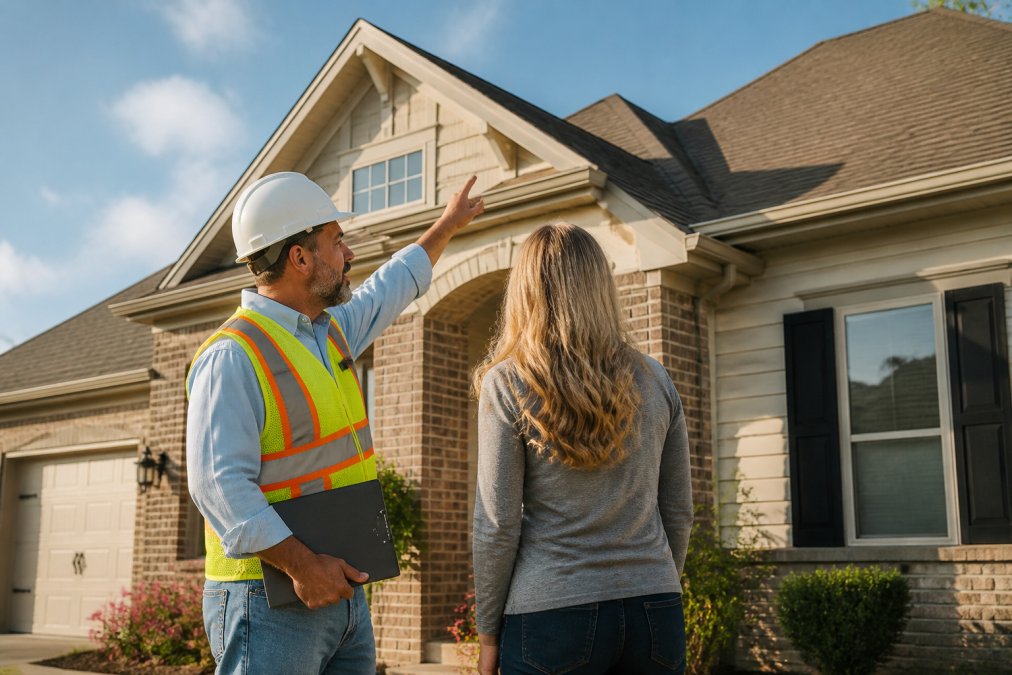
Alpha Guard offers affordable financing options to make tailored home care accessible for roof replacement projects.
Comparing Financing Methods: Pros, Cons, and Total Cost
Different roof replacement financing options serve different situations. The best choice depends on your credit score, available equity, timeline, and total project cost.
| Financing Method | Best For | Typical Rate Range | Approval Time | Collateral Required |
|---|---|---|---|---|
| Home Equity Loan | Homeowners with equity, good credit | Lower rates | 7-14 days | Home |
| HELOC | Flexible access, variable budgets | Variable rates | 7-14 days | Home |
| Home Improvement Loan | No collateral preference, faster approval | Moderate rates | 1-3 days | None |
| Personal Loan | Quick funding, any credit profile | Higher rates | 1-2 days | None |
| Contractor Financing | Immediate project start, promotional rates | 0% promotional | Same day | None |
| Cash-Out Refinance | Large amounts, long terms | Lower rates | 30-45 days | Home |
Home equity loans offer the lowest rates but require significant home equity and good credit. They’re ideal for larger roof replacement projects where you can access $20,000+ at favorable rates.
Home improvement loans balance accessibility with reasonable rates. They work well for homeowners without substantial equity or those who prefer not to risk their home as collateral.
Personal loans provide fastest funding and require no collateral, but carry higher rates.
Contractor financing enables immediate project starts with promotional 0% rates, but only if you can pay off the balance during the promotional period.
Cash-Out refinancing makes sense for large projects and long repayment horizons, but extends your mortgage timeline and involves closing costs.
Calculate the total cost for each option you’re considering. A lower interest rate doesn’t always mean the lowest total cost if the loan term is significantly longer. Consider your emergency fund and overall financial health. Lenders typically prefer borrowers with debt-to-income ratios below 43%.
Tax implications matter for certain financing methods. Home equity loan interest may be tax-deductible if you use the funds to substantially improve your home (consult a tax professional). Personal loan interest is never deductible.
Choosing the right roof replacement financing option requires balancing interest rates, approval timelines, collateral requirements, and total cost. Start by getting detailed roof replacement cost estimates, then compare financing options side-by-side using the same loan amount and term.
Alpha Guard’s certified professionals can discuss your project scope and budget, helping you understand which financing approach makes sense for your situation. Get a free estimate today to begin planning your roof replacement with confidence.
Frequently Asked Questions
What credit score do I need to qualify for roof replacement financing?
Most lenders require a minimum credit score between 580 and 620 for conventional financing, though some programs accept scores as low as 500. Home equity loans and HELOCs typically require higher scores (usually 620+) because they're secured by your home. If your credit score is lower, consider contractor financing programs or government-backed options, which may have more flexible requirements. Check with multiple lenders, as requirements vary significantly.
Are there government grants available for roof replacement?
Several government programs can help with roof replacement costs. PACE (Property Assessed Clean Energy) financing offers low-interest loans for energy-efficient roofing in participating states. Some states and municipalities offer weatherization assistance programs. The HUD Section 504 program helps low-income homeowners with essential repairs. Eligibility depends on income, location, and property type. Contact your local housing authority or state energy office to learn which programs apply to your situation.
Is roof replacement tax deductible in 2026?
Standard roof replacement is generally not tax deductible because it's considered a capital improvement, not a repair. However, if your roof replacement is part of a medical-necessity improvement (like a special ventilation system), you may claim it as a medical expense. Additionally, if you install an energy-efficient roofing system that qualifies for federal tax credits, you could claim those credits. Consult a tax professional to determine if your specific situation qualifies for any deductions or credits.
Do roofing companies offer 0% financing options?
Many roofing contractors partner with financing companies to offer 0% APR programs, typically for 12 to 24 months. These programs work best if you can pay off the balance within the promotional period; after that, interest rates can jump significantly. Read the fine print carefully, some programs charge origination fees or require a large down payment. Compare contractor financing offers against traditional home improvement loans to ensure you're getting the best total cost, including all fees and interest after any promotional period ends.
This article was written using GrandRanker