
Table of Contents
- Understand Your Climate and Structural Requirements
- Compare Roofing Material Types and Performance
- Evaluate Lifespan, Durability, and Warranty Coverage
- Residential Roof Replacement Cost Estimates and Budgeting
- Roofing Installation Best Practices 2026
- Account for Local Building Codes and Insurance Requirements
- Match Material to Your Home’s Aesthetic and Energy Goals
- Sustainability and End-of-Life Considerations
Last Updated: August 24, 2026
Understand Your Climate and Structural Requirements
Your roof must handle your region’s specific weather patterns, structural load, and environmental stresses. Before comparing products, understand your home’s roof pitch and structural capacity, these foundational factors determine which materials will work.
Roof Pitch and Load Capacity
Roof pitch (steepness) is expressed as a ratio: for every 12 inches of horizontal run, how many inches does the roof rise? A 4:12 pitch rises 4 inches per 12 inches of run.
Low-pitch roofs (under 4:12) shed water slowly and require excellent water barriers. Asphalt shingles typically need a minimum 2:12 pitch. Metal roofing and standing seam systems handle low-pitch applications well. Clay and concrete tiles need steeper pitches (usually 4:12 or higher) for proper drainage.
Load capacity is critical. Asphalt shingles weigh roughly 2-3 pounds per square foot. Metal roofing weighs 0.5-1.5 pounds per square foot. Clay and concrete tiles are heavy at 8-15 pounds per square foot. If your home’s structure wasn’t designed for tile weight, it’s not an option. A structural engineer can evaluate your home’s capacity if you’re unsure.
Heat, Wind, and Weather Durability
In hot climates, roofing materials expand and contract daily. Cool roof technology, using reflective granules or light colors, reduces surface temperature by 20-30 degrees Fahrenheit, extending material lifespan and reducing cooling costs (energy.gov).
Wind resistance matters everywhere. Three-tab asphalt shingles handle 60-80 mph winds (astm.org). Architectural shingles perform better at 120-130 mph. Metal standing seam systems handle 160+ mph winds. Clay and concrete tiles resist high winds well due to their weight and interlocking design.
Impact resistance is crucial in hail-prone regions. Architectural shingles with reinforced layers offer better hail protection than three-tab varieties. Metal roofing resists hail but can dent. Tiles are naturally impact-resistant. Check for impact resistance ratings (Class 1-4) when comparing materials in storm-prone areas.
Compare Roofing Material Types and Performance
Each roofing material has distinct performance characteristics, longevity, and cost structures.
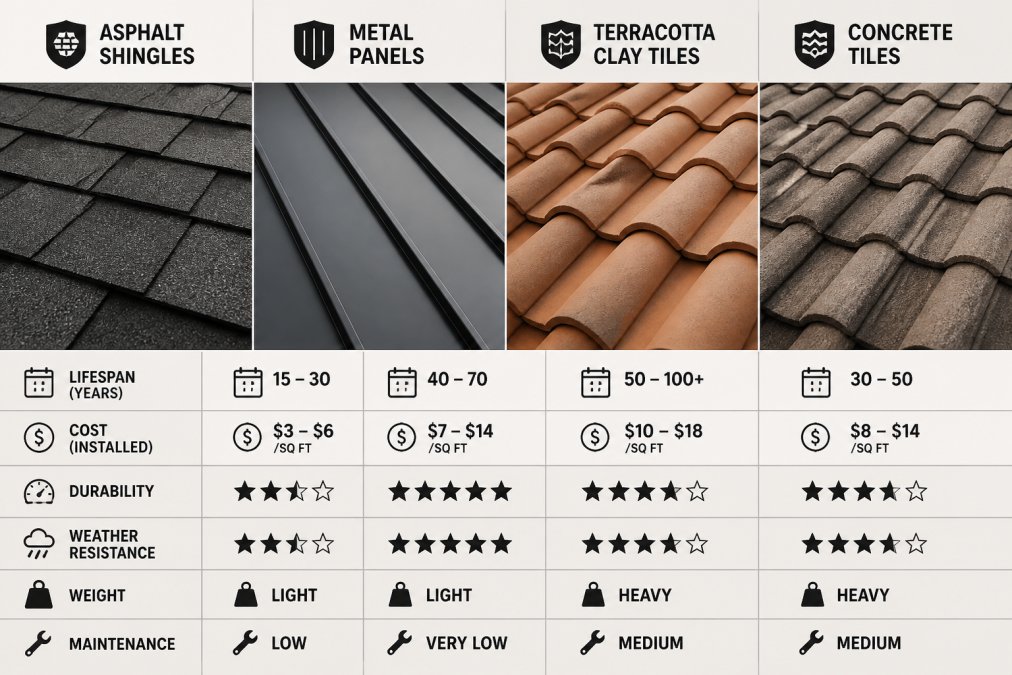
Asphalt Shingles: Three-Tab and Architectural Options
Asphalt shingles are used on roughly 80% of residential roofs (nrca.net). They’re affordable, quick to install, and available in many colors and styles.
Three-tab shingles are the basic option with three tabs creating a uniform appearance. They last 15-20 years, are lightweight and cheap upfront, but offer limited wind and impact resistance.
Architectural shingles have thicker, layered construction mimicking wood shakes or slate. They last 20-30 years, handle higher wind speeds (120-130 mph), and resist impact better. They cost 25-50% more than three-tab but deliver significantly better durability and curb appeal. In hot climates, architectural shingles with reflective granules provide better thermal performance.
Both types require underlayment and proper flashing. Asphalt shingles are vulnerable to UV degradation and can become brittle in extreme heat or cold.
Metal Roofing and Standing Seam Systems
Metal roofing is lightweight, durable, and energy-efficient. Types include standing seam (vertical seams running ridge to eave), corrugated panels, and metal shingles.
Standing seam metal is the premium option. Seams are mechanically locked, creating a water-tight barrier. Standing seam roofs last 40-70 years, handle extreme winds (160+ mph), shed snow and water efficiently, and require minimal maintenance. They’re lightweight (0.5-1.5 pounds per square foot), so most structures support them without reinforcement. The trade-off: higher upfront cost and a modern aesthetic that doesn’t suit all architectural styles.
Corrugated panels and metal shingles are less expensive than standing seam but outperform asphalt in durability and wind resistance. Metal roofing reflects heat well, reducing cooling costs in hot climates, and is recyclable. The main drawback is noise during rain or hail unless proper insulation and underlayment are installed.
Clay and Concrete Tiles
Tiles offer distinctive aesthetic appeal and exceptional longevity. Clay tiles last 50-100 years. Concrete tiles typically last 30-50 years. Both are heavy, durable, and naturally fire-resistant.
Clay tiles are traditional, especially in Spanish Colonial and Mediterranean styles. They’re naturally cool, extremely durable, and virtually maintenance-free. Drawbacks are significant: they’re heavy (8-15 pounds per square foot), requiring structural reinforcement. Installation is labor-intensive and expensive. Broken tiles require individual replacement. They’re brittle in freeze-thaw cycles, so they’re not ideal for cold climates unless freeze-resistant.
Concrete tiles mimic clay appearance at lower cost and slightly lighter weight. They last 30-50 years, handle freeze-thaw cycles better, and are more impact-resistant. They’re still heavy enough to require structural evaluation and are expensive to install and repair.
Both tile types require proper underlayment and ventilation. They’re best suited to warm climates where their aesthetic and durability justify the cost.
Solar Shingles and Cool Roof Technology
Solar shingles integrate photovoltaic cells into shingle-shaped panels, generating electricity while protecting your roof. They last 25-30 years and blend seamlessly with traditional shingles. Trade-offs: high upfront cost, lower efficiency than rooftop solar panels, and complex installation requiring electrical expertise.
Cool roof technology uses reflective granules, light colors, or special coatings to reflect solar radiation, reducing surface temperature by 20-30 degrees Fahrenheit. Cool roofs reduce cooling costs by 10-30% depending on climate and extend material lifespan by reducing thermal stress. Most asphalt shingles, metal roofing, and some tile options are available with cool roof technology. Look for Energy Star certification.
Evaluate Lifespan, Durability, and Warranty Coverage
Material lifespan varies dramatically. Asphalt shingles last 15-30 years. Metal roofing lasts 40-70 years. Tiles last 30-100 years. Longer lifespan doesn’t always mean better value, it depends on upfront cost, maintenance, and how long you plan to own the home.
Warranty coverage typically reflects manufacturer confidence. Standard asphalt shingle warranties are 20-25 years. Architectural shingles often have 25-30 year warranties. Metal roofing warranties range from 20-50 years. Tiles often carry lifetime warranties.
Read warranty fine print carefully. Most warranties require proper installation and maintenance and may be non-transferable if you sell the home. Some cover only material defects, not labor or removal costs. Premium products may offer transferable warranties that add value to your home sale.
Durability depends on material quality, installation precision, climate, and maintenance. Budget for periodic maintenance: asphalt shingles need inspection every 3-5 years, metal roofing every 5-10 years, and tiles every 10 years.
Residential Roof Replacement Cost Estimates and Budgeting
Roof replacement is a significant investment. Total cost depends on material choice, roof size, pitch, complexity, labor rates, and local market conditions.
Material Costs vs. Installation Labor
Material costs vary by type and quality. Asphalt shingles are the cheapest material option. Metal roofing costs more upfront but lasts longer. Tiles are the most expensive material but offer exceptional longevity.
Installation labor is often 40-60% of total roof cost. Complex roof designs (multiple valleys, skylights, steep pitches) increase labor costs. Local labor rates vary significantly by region.
When comparing quotes, ensure they include all components: material, underlayment, flashing, ventilation modifications, old roof removal, and disposal. A complete estimate should specify warranty terms and transferability.
Alpha Guard provides certified and insured professionals who handle all aspects of roof replacement, from material selection through installation and warranty documentation. Our guaranteed structural workmanship ensures your roof is installed to code with proper underlayment, flashing, and moisture barriers.
Financing Options and Long-Term Value
Roof replacement is expensive enough that many homeowners explore financing through home equity lines of credit, home improvement loans, credit cards, or contractor financing.
Consider long-term value, not just upfront cost. A premium material with a 50-year lifespan may cost more initially but costs less per year of use than a budget material lasting 15 years. Factor in energy savings from cool roof technology or solar shingles. In hot climates, a cool roof can reduce cooling costs by $100-300 per year, offsetting some of the upfront premium over 10-20 years.
Alpha Guard offers flexible financing options designed to fit homeowner budgets, making durable roofing solutions accessible without compromising on quality.
Roofing Installation Best Practices 2026
Proper installation determines how long your roof actually lasts and how well it protects your home. Even premium materials fail if installed incorrectly.
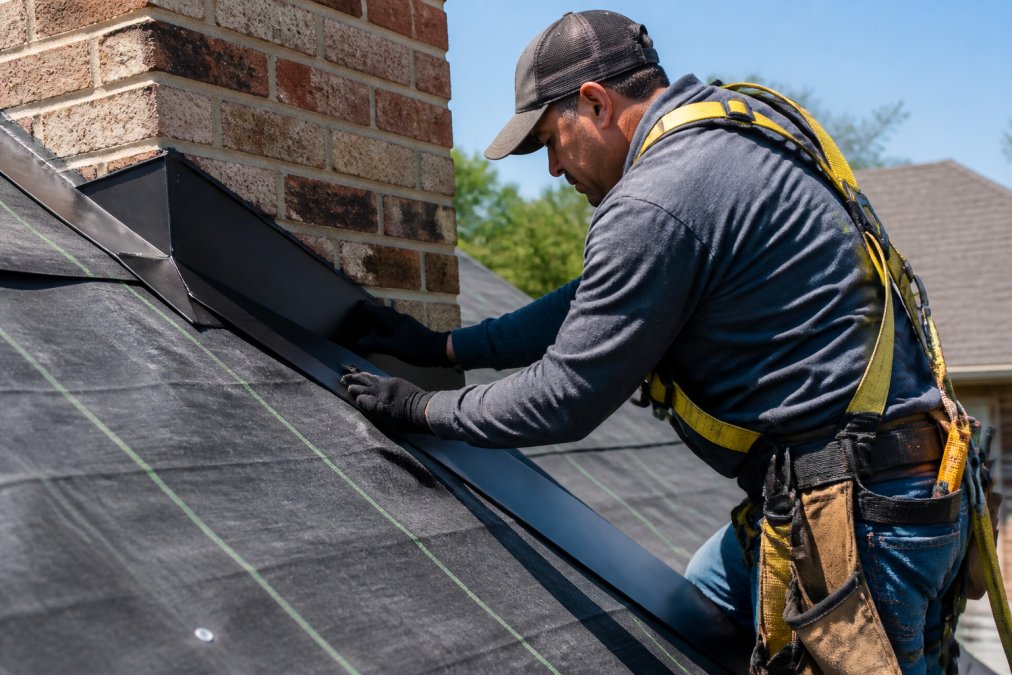
Underlayment, Flashing, and Moisture Barriers
Underlayment is a water-resistant layer installed directly on the roof deck, under the visible roofing material. Modern underlayment is typically synthetic (polypropylene or polyethylene), which resists UV degradation longer than traditional felt. Underlayment should overlap properly at seams and extend under flashing.
Flashing is metal (usually aluminum or galvanized steel) installed at transitions: where the roof meets walls, around chimneys, at valleys, and around skylights and vents. Poor flashing installation is the most common cause of roof leaks. Flashing must overlap in a shingle pattern so water runs down and off, not under.
Moisture barriers prevent condensation and water vapor from damaging the roof deck and attic. Proper ventilation (soffit vents, ridge vents, or attic fans) works with underlayment and barriers to manage moisture.
Installation best practices include:
- Installing underlayment with proper overlap and fastening
- Using ice and water shield in valleys and at eaves (in freeze-thaw climates)
- Installing flashing before the visible roofing material
- Ensuring flashing extends under the roofing material and over the exterior cladding
- Sealing all fastener penetrations
- Maintaining proper ventilation throughout the attic
Professional Installation vs. DIY Feasibility
Roof replacement is dangerous work. Falls are the leading cause of serious home injuries. Professional roofers are trained in fall protection, equipment use, and safety protocols.
Professional installation ensures warranty validity. Most manufacturers void warranties if installation isn’t performed by certified installers. Professional roofers understand local building codes and navigate permit requirements. They have liability insurance, protecting you if someone is injured on your property.
DIY roof replacement is feasible only if you have roofing experience, proper safety equipment, and your local code permits it. Most homeowners should hire professionals.
Alpha Guard’s certified and insured professionals bring expertise in local building codes, proper installation techniques, and warranty compliance. Our guaranteed structural workmanship means your roof is installed correctly, protecting your home and preserving your warranty coverage.
Account for Local Building Codes and Insurance Requirements
Building codes vary by jurisdiction and specify minimum requirements for roof pitch, material fire ratings, wind resistance, and installation methods. Before choosing materials, verify they meet local code requirements.
Fire ratings are important. The National Fire Protection Association (NFPA) classifies roofing materials by fire resistance: Class A (highest), B, C, or unrated. Many insurance companies offer discounts for Class A rated roofing. Asphalt shingles are typically Class A or B. Metal roofing is usually Class A. Tiles are Class A.
Insurance implications matter. Some insurers offer discounts for impact-resistant roofing (hail-resistant shingles or tiles) or cool roofs. Conversely, poor maintenance can increase premiums or result in non-renewal. Contact your insurance agent before choosing materials to understand how your choice affects coverage and cost.
Match Material to Your Home’s Aesthetic and Energy Goals
Your roofing choice affects your home’s appearance and energy efficiency. The material should complement your home’s architectural style and contribute to your long-term energy and sustainability goals.
Curb Appeal and Architectural Style
Architectural shingles and tiles offer more aesthetic variety than three-tab shingles. Metal roofing has a modern aesthetic that suits contemporary homes and some traditional styles. Asphalt shingles are versatile and available in dozens of colors, suiting most architectural styles.
Consider your home’s age, neighborhood, and resale value. A choice that enhances curb appeal can increase home value. Look at similar homes in your area to see what materials are common and well-received.
Energy Efficiency and Thermal Performance
Cool roof technology reduces cooling costs and extends material lifespan by reducing thermal stress. In hot climates, a cool roof can reduce surface temperature by 30 degrees Fahrenheit, reducing cooling costs by 10-30%.
Proper insulation and ventilation are equally important. Your attic should have adequate insulation (R-30 to R-60 depending on climate) and ventilation to prevent heat buildup. Metal roofing and standing seam systems, when properly installed with air gaps, provide better thermal performance.
Solar shingles or rooftop solar panels can offset energy costs over 20-30 years, though upfront costs are high. In sunny climates, solar is increasingly cost-effective, especially with federal tax credits and state incentives.
Sustainability and End-of-Life Considerations
Roofing materials have environmental impacts throughout their lifespan: manufacturing, transportation, installation, maintenance, and disposal or recycling.
Asphalt shingles are the least sustainable option. They’re petroleum-based, difficult to recycle, and end up in landfills. Some manufacturers now offer recycled asphalt shingle programs, but collection is limited.
Metal roofing is highly recyclable. At end of life, metal roofing is recovered and remelted for new applications, generating lower emissions than asphalt shingle manufacturing.
Clay and concrete tiles are durable and recyclable. Their 50-100 year lifespan means fewer replacements over a century, reducing cumulative environmental impact.
Cool roofs reduce cooling energy consumption, lowering your home’s carbon footprint. Solar shingles generate clean energy, offsetting grid electricity consumption.
Consider the full lifecycle: material sourcing, manufacturing emissions, transportation, installation waste, maintenance, and end-of-life disposal. A premium material with a long lifespan and recyclability may have lower total environmental impact than a cheaper material replaced multiple times.
Choosing roofing materials requires balancing climate resilience, structural compatibility, durability, cost, aesthetics, and energy goals. Your decision affects your home’s protection, appearance, and operating costs for decades. Alpha Guard helps homeowners navigate this decision by providing certified professionals who understand local climate demands and building codes. Get a free estimate to discuss your specific needs and explore how our guaranteed structural workmanship can protect your home while enhancing its value and efficiency.
Frequently Asked Questions
What is the most durable roofing material for high-heat climates?
Metal roofing and cool roof technology with reflective granules offer the best durability in high-heat environments. Metal standing seam systems resist thermal expansion and wind uplift, while cool roof materials reduce thermal performance issues by reflecting sunlight. Clay and concrete tiles also perform well in heat but carry higher structural load requirements. Your specific choice depends on roof pitch, structural capacity, and local building codes.
How do I compare roofing material costs in 2026?
Compare total installed costs, not just material price. Factor in underlayment, flashing, installation labor, and warranty coverage. Asphalt shingles cost less upfront but require more frequent replacement. Metal roofing and tiles cost more initially but last 40-70 years. Request detailed residential roof replacement cost estimates from certified professionals that break down material, labor, and overhead separately to make accurate comparisons.
Are energy-efficient roofing materials worth the investment in 2026?
Energy-efficient materials reduce cooling costs in hot climates, potentially offsetting higher upfront expenses over 10-15 years. Cool roof technology with Energy Star certification reflects more sunlight and reduces thermal performance demands on HVAC systems. Solar shingles generate electricity but require compatible electrical systems. Calculate your long-term savings based on local utility rates and climate conditions before deciding whether premium energy-efficient options fit your budget.
How does local climate impact roofing material selection?
Climate determines durability, maintenance needs, and lifespan. High-heat regions benefit from reflective granules and cool roof technology. Areas with heavy wind need impact-resistant materials and proper wind uplift ratings. Cold climates require materials that handle freeze-thaw cycles. Wet regions need superior moisture barriers and flashing. Local building codes often mandate specific fire ratings and wind ratings based on your area's climate history, so verify code requirements before selecting materials.
This article was written using GrandRanker