

Table of Contents
- Understanding Your Home Renovation Project Timeline
- The Home Remodeling Permit Process and Local Requirements
- Common Home Renovation Delays and How to Avoid Them
- How to Create a Renovation Schedule That Works
- Realistic Project Timelines by Renovation Type
- Site Preparation, Foundation Work, and Structural Considerations
- Budgeting for Your Home Renovation Project
- Managing Your Contractor and Project Milestones
Last Updated: August 14, 2026
Understanding Your Home Renovation Project Timeline
A home renovation project timeline is the structured schedule mapping every phase from initial planning through final walkthrough. Getting this right determines whether your project finishes on schedule and within budget.
Most homeowners underestimate renovation duration. What seems straightforward, removing a wall, installing flooring, updating plumbing, involves multiple dependent tasks that can’t happen simultaneously. Site preparation must finish before foundation work begins. Structural work must be complete before drywall installation. Material delays ripple through the entire schedule.
This guide walks you through what actually happens during a home renovation, from permit application to final inspection. We’ll break down realistic timeframes by project type, show where delays typically occur, and give you the framework to manage your schedule effectively. Whether you’re planning a kitchen remodel, roof replacement, or full-scale renovation, understanding these phases prevents common mistakes that turn two-month projects into six-month nightmares.
Start your home renovation project timeline planning three months before you want to break ground. This gives you time to secure financing, finalize designs, and navigate the permit process without rushing into construction unprepared.
The Home Remodeling Permit Process and Local Requirements
The home remodeling permit process is the regulatory approval system ensuring your renovation meets building codes and safety standards. In most jurisdictions, this step can’t be skipped and often costs homeowners weeks or months.
You’ll typically need permits for structural work, electrical systems, plumbing, HVAC modifications, and roof replacement. Cosmetic updates like painting or cabinet replacement usually don’t require permits.
Timeline depends on your local permit office’s backlog. A straightforward kitchen remodel permit might take two to four weeks if submitted correctly. Complex projects involving structural changes can take six to eight weeks. The biggest stumble: submitting incomplete applications, which get rejected and restart the clock. Missing engineer stamps, site plans, or contractor licensing information adds weeks.
Experienced contractors like Alpha Guard handle permit applications as part of their service. They know exactly what your local permit office requires and submit complete applications the first time. They also understand inspector schedules and can often schedule inspections more efficiently than homeowners attempting it alone.
The inspection process typically happens at three key points: after foundation work, after rough-in (electrical and plumbing installed but not finished), and after completion. Each inspection can take one to two weeks to schedule.
Submitting an incomplete permit application is the single biggest cause of timeline delays. Missing a single required document can push your project back 4-6 weeks. Verify every requirement before submitting, or hire a contractor who handles this for you.
Common Home Renovation Delays and How to Avoid Them
Common renovation delays fall into predictable categories. Knowing them lets you plan around them rather than being blindsided.
Material procurement delays top the list. Specialty items like custom cabinetry, imported tile, or specific roofing materials can have lead times of six to twelve weeks. If your contractor doesn’t order these immediately after permit approval, you’ll wait for materials while your crew sits idle. Identify long-lead items during design and order them before construction starts.
Weather interruptions matter more than expected. Outdoor work like roof replacement, siding installation, or foundation work stops during rain, high winds, or extreme heat. Summer heat can halt outdoor work during peak afternoon hours. Plan outdoor projects for spring or fall when possible, and build two to three weeks of weather buffer into your timeline.
Contractor scheduling conflicts happen when your contractor takes on multiple projects simultaneously. Before hiring, ask specifically about current workload and when they can dedicate a full crew to your project. Get it in writing.
Scope creep, expanding the project beyond the original plan, adds time and cost. Discovered water damage, unexpected foundation issues, or suggested upgrades each require new permits and material orders. Establish a clear change-order process upfront: any modification requires written approval and revised timeline before work begins.
Inspection delays occur when the permit office is backlogged. You can’t move to the next phase until the inspector approves the current one. Build this buffer into your timeline to prevent panic when inspections take longer than expected.
The contractors who manage timelines best order long-lead materials immediately, maintain detailed schedules with buffer time built in, and communicate delays to homeowners within 24 hours of discovering them.
How to Create a Renovation Schedule That Works
Creating a renovation schedule means breaking your project into phases, assigning realistic durations to each, and identifying which tasks can overlap and which must happen sequentially.
Start with these core phases in order:
- Design and permitting (4-10 weeks depending on complexity)
- Material procurement (2-12 weeks depending on items needed)
- Site preparation and demolition (1-3 weeks)
- Foundation and structural work (2-6 weeks)
- Rough-in systems (electrical, plumbing, HVAC) (2-4 weeks)
- Inspection and corrections (1-2 weeks)
- Finishing work (drywall, flooring, painting, cabinetry) (3-6 weeks)
- Final inspection and walkthrough (1-2 weeks)
Some tasks can run in parallel. While your contractor orders materials, you can finalize design details. While rough-in work happens, finishing materials can be delivered and staged. But structural work must be complete before drywall goes up. Electrical rough-in must be done before walls are closed.
Build in contingency time, add 20-30% buffer to account for unexpected issues, weather, or inspection delays. If your contractor estimates 12 weeks, plan for 14-16 weeks.
Use a visual timeline, Gantt chart, calendar, or spreadsheet, showing start and end dates for each phase. Share this with your contractor and review it weekly. When delays occur, adjust future phases rather than rushing.
The most successful renovations use a detailed written schedule identifying dependencies between tasks, assigning realistic durations based on past projects, and including explicit contingency time for the unexpected.
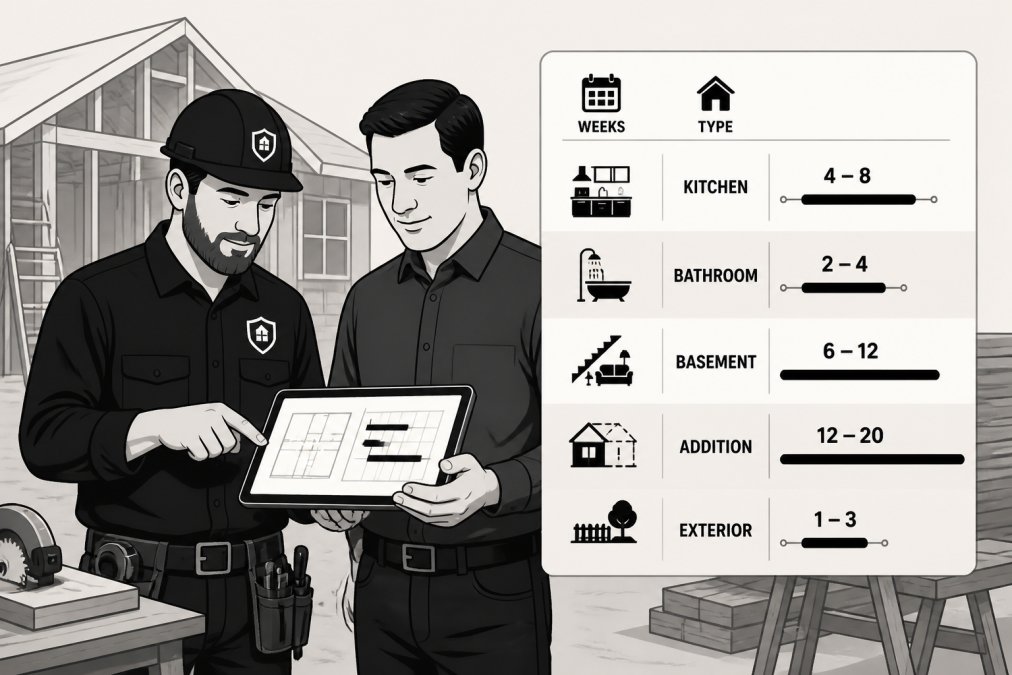
Realistic Project Timelines by Renovation Type
Different renovation types have different timelines based on complexity, permit requirements, and material lead times.
Kitchen and Bathroom Remodels
A kitchen remodel is one of the most complex home renovation projects because it involves structural work, electrical, plumbing, gas lines, cabinetry, and finishes.
A mid-range kitchen renovation typically takes 8-12 weeks from permit approval to completion, assuming no major structural changes, no unexpected plumbing or electrical issues, and materials arrive on schedule. Demolition takes one week. Rough-in work takes two to three weeks. Inspection happens in week four. Drywall, flooring, and cabinet installation take three to four weeks. Finishing work takes two weeks. Final inspection takes one week.
Bathroom remodels move faster. A full bathroom renovation typically takes 6-8 weeks. A half-bath can be done in 4-5 weeks.
Kitchen and bathroom timelines expand with material delays and unexpected discoveries. If custom cabinetry has a 10-week lead time and you don’t order it immediately, that alone adds 10 weeks. If the contractor discovers hidden mold or structural damage during demolition, add two to four weeks for remediation.
Roof Replacement and Structural Work
Roof replacement is faster than expected but highly dependent on weather and material availability.
A standard roof replacement on a single-story home takes 3-5 days for installation. However, the full project timeline from permit to completion typically spans 6-10 weeks, accounting for permit approval (2-4 weeks) and material procurement (1-3 weeks).
Structural work is slower. Adding support beams, reinforcing the foundation, or addressing structural damage takes 4-8 weeks. This involves engineering assessments, permit approval, and careful sequencing because other work can’t proceed until structural integrity is confirmed.
Weather significantly affects roof work. Rain stops installation. High winds halt work. Summer heat can force work to early morning or evening hours, extending the timeline.
Outdoor Living Spaces and Fencing
Outdoor projects have simpler permit requirements than interior work, which speeds the timeline.
A fencing project typically takes 2-4 weeks from permit to completion. A patio or deck project usually takes 4-8 weeks depending on size and complexity. Site preparation takes one to two weeks. Foundation installation takes one week. Surface installation takes one to two weeks. Finishing takes one week.
Outdoor projects expand when drainage and grading issues arise. Your property’s drainage patterns determine how the foundation must be prepared. Poor planning causes water damage later, so contractors spend extra time getting it right.
Site Preparation, Foundation Work, and Structural Considerations
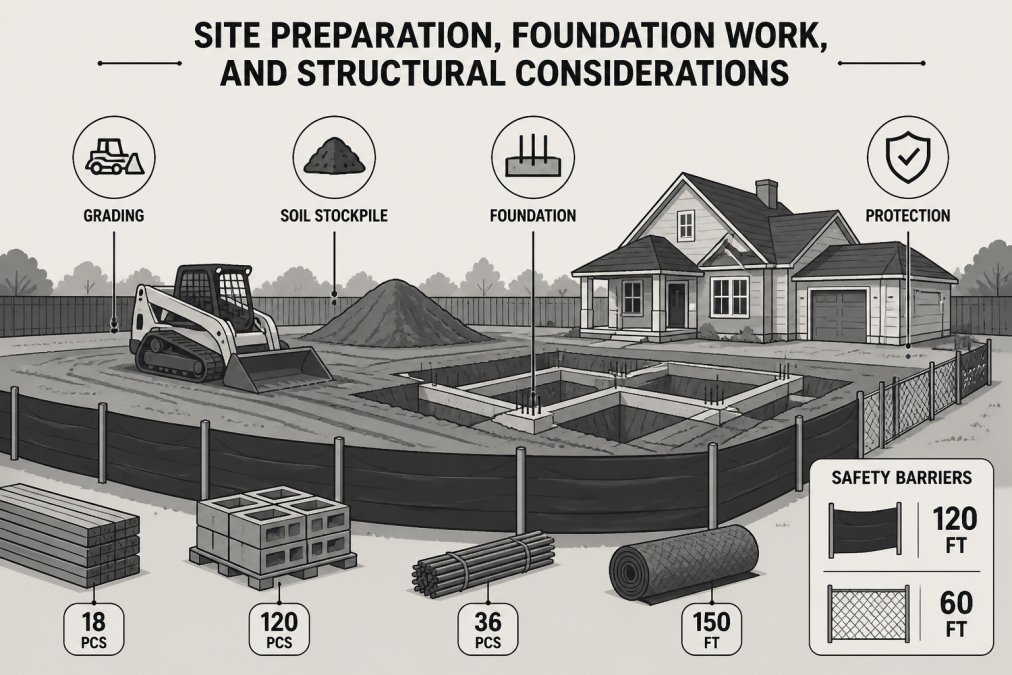
Site preparation is where your home renovation project timeline either stays on track or begins to slip. This phase involves clearing the work area, protecting existing structures, and preparing the foundation for new work.
Site preparation typically takes one to three weeks depending on scope. For simple room renovations, it means protecting floors and removing fixtures. For larger projects, it means grading the property, managing drainage, clearing vegetation, and staging materials.
Grading and drainage work is critical because it prevents water damage during and after construction. Improper grading causes water to pool near your foundation, leading to moisture problems and structural damage. Contractors spend time getting slopes and drainage right because fixing it afterward costs far more.
Foundation work follows site preparation. Whether installing a new foundation, reinforcing an existing one, or preparing for structural work, this phase typically takes two to four weeks. It involves excavation, forming, pouring concrete, and curing time. Concrete curing takes 28 days to reach full strength, though work can often resume after 7-10 days.
Structural integrity assessment happens during this phase. If the contractor discovers settling, cracks, rot, or inadequate framing, they must be addressed before proceeding. This can add two to four weeks to your timeline.
Never skip proper site grading and drainage preparation. Water intrusion is the leading cause of structural damage in renovations. Spending an extra week getting drainage right prevents months of problems later.
Budgeting for Your Home Renovation Project
Budgeting directly impacts your home renovation project timeline because insufficient funds cause work stoppages.
Establish your total budget first, then allocate it across phases: design and permits (5-10%), materials (40-50%), labor (30-40%), contingency (10-15%), and finishing touches (5-10%).
The contingency amount matters enormously for timeline management. If you budget $50,000 total with no contingency and discover $8,000 in unexpected foundation repairs, work stops until you find the money. With a proper 15% contingency ($7,500), you have a buffer for surprises.
Material costs vary seasonally. Roofing materials often cost more in spring when demand peaks. Lumber prices fluctuate. Ordering materials during off-peak seasons saves money and sometimes improves lead times.
Alpha Guard offers affordable financing options that let you spread costs across the project timeline rather than paying everything upfront. This approach keeps cash flow steady and prevents work stoppages.
Get detailed quotes breaking down labor, materials, and timeline separately. You need to know: materials cost, lead time, labor cost and duration, permit costs and timeline, and contingency allocation.
Build a contingency reserve of at least 15% of your total budget specifically for unexpected issues. This prevents budget shortfalls from halting your project mid-way through.
Managing Your Contractor and Project Milestones
Managing your contractor means establishing clear milestones, communicating expectations, and tracking progress against your home renovation project timeline.
Define specific milestones with completion dates: permit approval by week 3, materials delivered by week 6, rough-in inspection passed by week 10, drywall finished by week 14, final inspection by week 18. Each milestone should have clear deliverables and success criteria.
Weekly progress meetings, even brief 15-minute calls, keep everyone aligned. Review what was completed, what’s coming next, identify obstacles, and adjust the timeline if needed. Documented communication prevents misunderstandings.
Establish a change-order process upfront. Any modification requires written documentation showing the change, cost impact, and timeline impact. This prevents scope creep from derailing your schedule.
Payment should be tied to milestones, not just percentages. Pay 20% at permit approval, 30% when materials arrive and rough-in begins, 30% when rough-in inspection passes, and 20% at final completion. This structure ensures cash flow while protecting you from paying for incomplete work.
Inspect work regularly. Walk the site weekly and document progress with photos. Address issues immediately rather than discovering problems at final walkthrough. Fixing problems mid-project is faster and cheaper than fixing them after the contractor has moved on.
If your contractor falls behind schedule, address it directly. Ask what’s causing the delay and what resources they need to get back on track. Sometimes adding crew members accelerates the timeline. Ignoring delays guarantees they’ll worsen.
Managing a home renovation project timeline requires planning, clear communication, and realistic expectations about how long each phase actually takes. Contractors who deliver on time build contingency time into schedules, order materials early, and communicate proactively when issues arise.
Alpha Guard brings certified and insured professionals who manage timelines with precision. Their guaranteed structural workmanship means you’re not paying for rework or delays caused by poor initial installation.
Get a free estimate from Alpha Guard and discuss your specific project timeline. They’ll break down realistic phases, identify potential delays, and give you a detailed schedule you can count on.
Frequently Asked Questions
What is the typical timeline for a home renovation project?
Home renovation timelines vary based on scope and complexity. A bathroom remodel typically takes 4-8 weeks, kitchen renovations 8-12 weeks, and roof replacements 1-3 weeks depending on size. Structural work and foundation installation can extend timelines significantly. Local permitting adds 2-6 weeks depending on inspection schedules and code compliance requirements. Most residential projects see delays due to permit processing, material lead times, or unexpected structural issues discovered during work.
How does the home remodeling permit process affect my project timeline?
Permit acquisition typically adds 2-6 weeks to your overall project timeline. Your contractor submits plans to the local building department, which reviews them for code compliance. Inspections occur at multiple stages: foundation, framing, electrical, plumbing, and final walkthrough. Plan for potential revisions if plans don't meet code requirements on first submission. Having your contractor familiar with local requirements speeds this process considerably and prevents costly rework.
What are the most common home renovation delays I should expect?
Supply chain delays remain a top cause, especially for specialty materials and custom cabinetry with lead times of 6-12 weeks. Permit delays occur when inspectors find code compliance issues. Weather impacts outdoor work significantly in hot climates. Unexpected structural problems discovered during demolition or site preparation can add weeks. Contractor scheduling conflicts and material availability also cause setbacks. Building in a 10-15% buffer into your timeline helps absorb these common delays without derailing your project.
How do I create a realistic renovation schedule for my specific project?
Start by defining your renovation scope clearly with your contractor, including site preparation, structural work, material procurement, and final walkthrough phases. Break the project into milestones: permitting, demolition/site prep, foundation or structural installation, primary construction phases, and inspections. Account for permit processing time separately. Request material lead times upfront and factor in buffer days for each phase. Track project milestones weekly with your contractor to catch delays early and adjust the schedule proactively before they compound.
This article was written using GrandRanker